
Home Blog

Irrigation Management Key to Preventing Phytophthora in Orchards

0
Phytophthora infection causing of gumming on the trunk (Photos by Jaime Ott.)

Regardless of your irrigation water source, UCCE farm advisor Jaime Ott emphasizes that irrigation management is Phytophthora management in the orchard.
Phytophthora is a genus of plant pathogens, with more than 200 species, several of which cause root rot, crown rot and pruning wound cankers. Phytophthora infection is caused by an aggressive pathogen taking advantage of soil saturation.
Although these pathogens can be found in surface waters, Ott’s recent study shows they also can be common in orchard soils, regardless of the source of the irrigation water used in that orchard. It is water, either standing water or saturated soils, that allows Phytophthora to infect trees, and Ott stresses that good irrigation management is crucial to prevention, no matter the water source.
When there is standing water or saturated soil in an orchard for more than 24 hours and the pathogen is present, spores move toward the tree and infect roots, causing leaf yellowing, poor vigor, lack of fine roots and eventual tree death. Symptoms are a sign of disconnect between roots and tree canopy, Ott said, as the infection restricts movement of water and nutrients.
Infected tree trunks led to leaf yellowing and amber-colored gumming in almonds, dark bleeding cankers in walnuts. Trees can collapse after bud push or in warm weather. Infections can quickly kill young trees. Older trees may show symptoms over a period of time before production is affected. Once the tree is infected, symptoms can progress even without the presence of excessive water.
Waterlogging can lead to similar symptoms, but they generally improve once the excess water is gone and the tree has had a chance to regrow fine roots.
Proper Irrigation Practices Essential to Limit Disease Spread
Some key preventatives include reducing ponding with irrigation application rates that do not exceed the infiltration rate, reducing length of soil saturation with shorter, more frequent sets, and avoiding wetting tree trunks, choosing wetting patterns that avoid tree trunks and moving drip emitters away from the trunk.

Phytophthora infection causing of gumming on the trunk (Photos by Jaime Ott.)
With the bark peeled away showing the canker underneath. These are 2nd leaf almonds, Independence on Bright's Hybrid 5
With the bark peeled away showing the canker underneath. These are 2nd leaf almonds, Independence on Bright’s Hybrid 5

Ott wrote in the UC publication Sac Valley Orchards that using resistant rootstocks can help limit Phytophthora diseases when planting new orchards or putting in replants. No rootstock is immune to Phytophthora, making irrigation management crucial.
Ott said many previous studies have shown that Phytophthora species are common in surface sources of irrigation water. Phytophthora has not been found in groundwater unless the well has been contaminated with surface water. The assumption has been that using surface water to irrigate orchards carries a greater risk of root or crown rot. Ott said in her experience, there are orchards with root or crown rot that are irrigated with groundwater and orchards irrigated with surface water that show no symptoms of these diseases.
In her study in the Stockton East Water District, Ott and collaborators Greg Browne from USDA ARS and UCCE advisor Mohamed Nouri sampled surface water irrigation sources monthly from June to October and tested for Phytophthora using DNA sequencing. She reported that nearly every testing site had at least one Phytophthora species of concern to orchards, a finding that is consistent with previous studies.
In spite of the presence of Phytophthora in the surface water used for irrigation, the trial determined that the source of the irrigation water did not affect the chances of finding Phytophthora in the soils. It also found that Phytophthora was common in orchard soils, with 32.5 percent of sampled orchards testing positive. Groundwater-irrigated orchards were as likely to have this pathogen present as orchards irrigated with surface water, indicating that surface water was not the main factor in Phytophthora infections and irrigation with surface water may not increase risk of the disease.
Ott’s study went farther, looking at whether Phytophthora in a surface water delivery system can get into an orchard via the irrigation system, given the filtration of surface water to keep emitters from plugging.
Testing water in three surface water-irrigated orchards, two with drip and one with sprinklers, and in two groundwater-irrigated orchards, Ott found that Phytophthora did reach the orchard and the sand media filter did not affect the regularity of the detection.
Ott said it is difficult to determine the source of Phytophthora in orchard soils. Historical flooding may be one answer. Infected planting material and soil on orchard equipment are other possible routes into an orchard.

Managing Plant-Parasitic Nematodes in Walnuts Under Changing Production Conditions

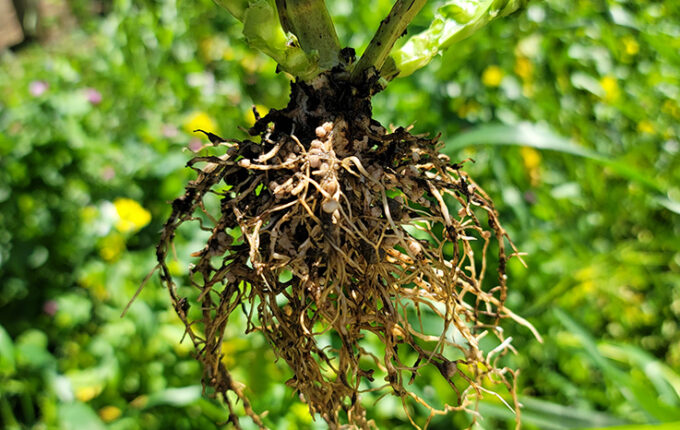
Walnuts are sensitive to soil-borne pests and diseases, foremost plant-parasitic nematodes can damage new plantings already at low population densities (Photo courtesy Andreas Westphal.)

The California walnut industry goes through difficult times. In addition to market challenges, several production issues task the sustainability of walnut production. Quickly changing regulatory requirements modify the way walnuts can be grown. The Sustainable Groundwater Management Act (SGMA) makes production in southern parts of the valley problematic, and many orchards have been or are being removed. Another critical change in policy is the increasing stringency of regulations for application of 1,3-dichoropropene (1,3-D). This material has been widely used, often in co-applications with chloropicrin when walnut followed walnut, to reduce soil-borne diseases.

Regulatory Pressures and Soil Fumigation Challenges
Walnuts are produced on rootstocks more adopted to soil conditions than the scion cultivars would be. The long-term go-to rootstock was ‘Paradox,’ a cross of Northern California Black Walnut and English walnut. It is susceptible, among others, to root lesion nematodes, Phytophthora root and crown rot, crown gall, and the so-called replant disease. Preplant soil fumigation with 1,3-D has reduced the damaging effects, especially of root lesion nematodes, that can reduce plant growth at 1 nematode per 250 cc of soil at planting. The replant disease was mitigated by soil treatments with concomitant application of chloropicrin.

With the new regulations in effect since January 1, 2024, and January 1, 2026, soil moisture conditions have to be much higher than previously and are not conducive for sufficient 1,3-D gas movement through the soil to reach plant-parasitic nematodes. Requirements of deeper injection and the possibility of covering the soil by totally impermeable film (TIF) add expense to the process. The restriction to smaller field sizes that may be treated in a single day add to logistical challenges. In essence, soil fumigation with 1,3-D becomes much more expensive, less effective and more cumbersome to use.

Rootstocks and Biological Considerations
Soil fumigation practice is viewed as troublesome because large amounts of chemicals are used per acre. The Sustainable Pest Management Roadmap that aims at a reduction of synthetic pesticide use by 90% and for 90% of the farms to practice sustainably by 2050 further exacerbates the challenge to establish productive walnut orchards for coming generations. In essence, the production system needs a thorough overhaul. Among the soil-borne plant pathogens, the root lesion nematode is probably the most notorious. In surveys, it was found in 85% of the orchards tested. In addition to its low threshold level, it occurs at least 5 ft deep in soil and is difficult to reach by management tools. Using rootstocks that don’t get damaged by this nematode has high sustainable appeal because these hypothetically “solve the problem for good.” Root lesion nematode-tolerant rootstocks are commercially available.

‘VX211’ and ‘Grizzly’ are promoted for their medium to high levels of nematode tolerance. It is important to remember that these rootstocks are susceptible to nematode parasites but don’t seem to suffer damage as much as others. While an enticing practical approach, biologically there are limitations of using nematode-tolerant rootstocks. It is not known how the high population densities that can develop under these rootstocks will interact with the trees in decades to come. There is also a lack of information how expansive this tolerance is.

‘Using tolerant rootstocks alone may not be enough, as high nematode populations can still pose long-term risks to orchard health.’

For example, it appears that VX211 often can tolerate root lesion nematode but does get damaged when root-knot nematodes are feeding on its roots. This latter species is less in the growers’ mind since pure English rootstocks (that are very susceptible and sensitive to this nematode) are seldom used anymore. In root lesion nematode, large population densities over time could create the possibility of selection of new “types” of this species. Perhaps, such nematodes could “learn” how to damage a tolerant rootstock. Because the current tolerant rootstocks allow for copious nematode reproduction, the risk for such shift in the nematode population appears real. After all, selection is a numbers game.

The more individuals are exposed to certain environmental queues, the higher the risk to encounter a new or different type of nematodes. Limiting nematode reproduction is liable to reduce these risks. While resistance has its own biological problems, broad resistance to root lesion nematode combined with tolerance is an important goal in rootstock development. These matters probably sound theoretical, but alertness of possible nematode population changes must not go ignored.

In a large cooperative effort of (molecular) breeders, engineers, plant scientists and plant pathologists (different UC campuses and USDA-ARS), farm advisors (UCANR), nurseries, and grower collaborators, a rootstock development program is in place. Graciously supported by the California Walnut Board and Commission, by CDFA, and the federal grantor NIFA, numerous rootstock trials are in place on commercial farms and on research stations. Out of these efforts, one rootstock, tentatively called ‘K3,’ expressed reduced susceptibility AND tolerance to root lesion and root-knot nematodes.

K3 performed well in regional rootstock trials in the Sacramento Valley. It also showed tolerance to the walnut replant disease when planted to non-treated root lesion nematode-infested walnut replant sites. This rootstock is nearing release for commercial use. In the said breeding and development program more rootstocks are expected to become available in the next few years. These rootstocks combine resistances to root lesion nematode, root-knot nematode, crown gall, and Phytophthora crown and root rot. These rootstocks are currently undergoing on-farm testing. Readers are invited to participate in testing of ‘K3’ and other rootstocks to get a first-hand look at the new technology as it nears release.

Alternatives to Fumigation and Future Directions
Developing rootstocks is a tedious process. Despite the high appeal of using such superior rootstocks, growers can’t wait if they plan to replace walnut orchards. Comprehensive studies to identify possible alternatives to soil fumigation with 1,3-D have been ongoing for decades. In recent years, new chemistries have become available that were perceived to have potential as pre-plant soil treatments. These are so-called “non-fumigant nematicides.”

In contrast to 1,3-D, these chemicals cannot redistribute in the soil environment after application. They need to be delivered to the target sites in the soil profile. Such delivery can be done with copious amounts of drench water that wets the soil profile 5 ft deep. Approximately six inches of water are necessary to accomplish this delivery. Such treatment requires complex irrigation systems and capabilities to inject the chemical into the irrigation stream.

Fascinatingly, several of the non-fumigant chemicals had efficacy in reducing nematode numbers in the soil profile at just a few pounds of active ingredient per acre compared to the several hundred pounds of 1,3-D necessary. But in addition to the application challenges, the level of efficacy of these materials was insufficient for a stand-alone preplant treatment. Only the (bio-) fumigant Dominus (AITC-containing material) was effective in reducing nematode numbers throughout the soil profile when delivered with irrigation water to the target sites. Simplified application methods had been developed. But high amounts per acre (40-80 GPA) of this material were necessary for efficacy, rendering it a poor fit for SPM. In addition, volatile organic compound regulation may encumber its registration.

The biorational method of anaerobic soil disinfestation (ASD) showed more promise for acceptability concerning air quality regulations and other human health concerns. In this method, easily decomposable organic matter is spread on the soil surface, incorporated, drip irrigation lines and totally impermeable film (TIF) installed, and the soil kept moisture-saturated for about one month. With the proper amount of substrate, preferably rice bran, and the correct irrigation schedule, this method is highly effective in reducing plant-parasitic nematodes and the replant disease from soil.

Key challenge is its expense and the excessive amount of plastic necessary for this procedure. This method requires copious amounts of drench water and is well-suited for flat level ground but probably would be difficult to use in hilly fields. Research work is ongoing to reduce application expenses by methods that eliminate the need for plastic cover and drip irrigation lines. Also, use of alternative substrates is investigated. Root lesion nematode-resistant cover crops are cropped during the fallow period between orchard cultivation.

In late summer, biomass produced by such crops is then macerated and incorporated in the soil as substrate for ASD. This may further reduce the expense of this method and make it better locally adoptable. Here, another offer to growers who plan to plant a new walnut orchard in the near future. The author of this article is on standby to test these new ASD tools on commercial farms. Growers interested in seeing these procedures first-hand and learning how to implement them on their farms are encouraged to reach out to the author.

Post-Plant Management and Orchard Recovery
Efforts invested in testing post-plant remedies for existing walnut orchards confirmed that Movento applications following the original protocol developed by Dr. Mike McKenry offered yield protection. Of other post-plant tools, Salibro was the most effective in reducing population densities of root lesion nematodes. Currently, this material is registered for non-bearing orchards only. In essence, it is only useful to establish a new orchard, but for bearing years it cannot be used until the registration is encompassing that use as well.

At the current time of reduced planting, growers may wonder if extended fallow periods or “crop rotation” rid their soils of the soil-borne plant pathogens that can create so much trouble. While there is some alleviation of the soil-borne pest and disease problems, extended fallow is typically not sufficient to forego any type of corrective action before planting a new orchard. For example, an over-the-thumb rule is that the replant disease in a fallow field after walnut orchard removal declines by 50% per year, meaning from 50%, 25%, 12.5% and so forth. So, some alleviation will come from patience.

Root lesion nematodes will also decline, but their very low threshold level coupled with their high reproductive capacity can make them resurge quickly. “Rotating” to other crops has limited value. Almond, stone fruit, and pistachio all host root lesion nematode and will be damaged by it.

So in summary, sustainable production of walnut remains challenging under the new conditions. There is hope on having new and improved rootstocks available that will reduce the negative impacts of soil-borne pathogens on walnut within the next few years. Until then, soil treatment options are being developed that carry the potential to partially replace chemical soil preplant fumigation. These methods become more affordable and are set to compete with the ever more cumbersome and costly chemical treatments.

Research never stops, so additional tools are being tested and developed. It is the nature of perennial crops that developing additional alternatives will take time. Progressive and curious growers are encouraged to participate in on-farm studies to support the quick adoption and implementation of technologies available now. The researchers “can’t do it without you.”

Sym-Agro, Inc. Names New Southern California Sales Manager

0

Visalia, Calif., April 15, 2026 – Sym-Agro announces that Adam Cholakian has joined the company as Southern California Sales Manager, primarily focused on the Central Valley markets from Madera, South.

Cholakian has over 25 years of progressive experience in the agricultural industry, ranging from Farm Management, Retail Market Manager, and most recently Technical Sales Representative for Amvac Chemical Corporation.  He brings over 15 years of experience working on the manufacturer’s side of the agricultural industry, giving him a deep understanding of the challenges and opportunities facing growers.

He earned a Bachelor of Science in Plant Science/Plant Health Option from California State University, Fresno and has been actively involved with CAPCA, having held several offices at the local chapter level.

“Well known and respected in the agricultural community for many years already, we feel very fortunate to have the expertise of Adam representing the Sym-Agro portfolio of biopesticide products and continuing to strengthen relationships with our distribution partners.” said Peter Bierma, President and CEO of Sym-Agro.

Sym-Agro is a trusted partner to customers in high value agricultural markets, offering forward thinking, highly effective, and sustainable solutions that anticipate evolving market needs in pest management and crop resilience. Headquartered in Visalia, California, the company is committed to providing reliable, high-performance products that deliver consistent, field-tested results for managing pests, diseases, and other crop stressors. For more information, visit sym-agro.com

Contact:          Peter Bierma
Company:       Sym-Agro, Inc.
Phone:            503-799-4551
Email:             peter@sym-agro.com

What Codling Moth Taught Us About Building Biological Pest Management and Why It Matters for Diamondback Moth

Crop plants showing heavy diamondback moth feeding damage (Photo courtesy of Dr. Ian Grettenberger University of California at Davis.)

For pest control advisors working in vegetable crops, few insects inspire as much frustration as diamondback moth (Plutella xylostella). Despite decades of insecticide development, this pest continues to evolve resistance, exploit production gaps, and resurge when control programs falter. As regulatory pressure increases and broad-spectrum options continue to erode, interest in the development of biological pest management (bioinsecticides, natural enemies, etc.) for this pest has grown. (Fig. 1)

Codling moth (Cydia pomonella) control in apples provides an amazing biological insect pest management success story. At first glance, application of this success story to diamondback moth may seem difficult. Codling moth is a tree fruit pest, diamondback moth attacks annual vegetable crops. And while their biology differs in important ways, codling moth remains one of the clearest examples of the investments needed to develop a durable, biologically based pest management system.

The central lesson from codling moth is not about a single tool or product. It is about process. Codling moth biological management did not emerge overnight. It was built slowly and deliberately. That history provides a realistic lens through which to evaluate what biological pest management for diamondback moth might look like, the scale of investment needed, and where advisors can play a critical role.

Two Very Different Ways to Manage Insects
For most of the twentieth century, pest management followed a broad-spectrum paradigm. Insecticides such as organophosphates, carbamates, and pyrethroids worked across many insect pests because they disrupted conserved physiological pathways, were residual contact-active, and had long residuals. Thus, one product could suppress multiple pests, often across several life stages. For managers, this meant fewer decisions, simpler timing, and predictable short-term results.

Diamondback moth fit well within this paradigm until it didn’t. Resistance to many if not most modes of action is now widespread globally (Zalucki et al. 2012; Furlong et al. 2013). The result has been increasing spray frequency, shrinking windows of efficacy, and rising production risk.

Biological pest management represents a fundamentally different approach. Rather than suppressing pests through generalized toxicity, biological systems exploit species-specific vulnerabilities: phenology, mating behavior, host specialization, microbial susceptibility, and ecological interactions. This approach is slower to develop, harder to generalize, and far more knowledge intensive. The payoff, when successful, is durability.

Codling moth biological management triangle. Each side of the triangle interacts to create sustainable management (Photo courtesy of Dr. Matthew Grieshop Cal Poly San Luis Obispo.)

Codling moth illustrates this tradeoff better than almost any other agricultural insect pest.

Why Codling Moth Became a Biological Management Success
Codling moth (Cydia pomonella) is the most economically significant insect pest of apples. Its larvae feed internally within fruit, making damage severe and difficult to prevent. Historically, this biology forced growers to rely heavily on insecticides and precise spray timing.

These challenges drove an extraordinary research and extension effort. Because codling moth control failed so easily when mistimed, researchers were compelled to understand the insect in detail. Over decades, this work coalesced into a biological management system built around three interacting components (Fig. 2).

The Codling Moth Biological Management Triangle
1. Phenology as the management framework
2. Mating disruption as baseline population suppression
3. Granulosis virus as targeted larval control

No single component works reliably on its own. Together, they form a system that has enabled large-scale organic apple production and reduced insecticide reliance across conventional orchards (Jones et al. 2008; Witzgall et al. 2010).

Phenology: The Foundation That Came First
The first pillar of codling moth biological management is phenology, and it predates biological products by decades.

A 40-Year Head Start

Codling moth phenology research began in the 1930s, initially as descriptive life-history work documenting instars, seasonal flight patterns, and overwintering behavior (Shelford 1927; Glenn 1922). By the 1950s and 1960s, researchers recognized that codling moth development was tightly temperature-driven and synchronized with host fruit phenology.
This led to the development of degree-day models, with the first widely adopted codling moth degree-day model published in the early 1970s (Riedl et al. 1976). By the 1980s, these models were being disseminated through extension programs across North America.

Estimated investment:
• ~40 years of research (1930s–1970s)
• 15–25 university and government programs
• 50–100 core scientists
• Hundreds of graduate students and technicians
• Dozens of extension professionals

For advisors, phenology transformed codling moth management from calendar spraying to event-based decision-making. Eggs and neonates became management targets, not just “the season.” (Fig. 3)

Mating Disruption: From Curiosity to Keystone Technology
Mating disruption, now considered the cornerstone of codling moth biological management, took decades to reach this status.

The concept was first proposed in 1967, with early demonstrations in cabbage looper (Shorey and Gaston 1967). Codling moth pheromone chemistry was elucidated in 1971 during a period of rapid growth in chemical ecology (Roelofs et al. 1971).

Commercial adoption, however, lagged far behind discovery. Economical pheromone synthesis, dispenser development, and field-scale validation took time. Widespread adoption did not begin until the 1990s, and area-wide programs only became common after 2000 (Cardé and Minks 1995; Witzgall et al. 2010).

By 2015, approximately 90% of Washington apple acreage was under mating disruption (Washington Tree Fruit Research Commission data).

Estimated investment:
• ~45–50 years (1970s–2010s)
• 20–30 research programs
• 75–150 scientists
• Hundreds of graduate students and postdocs
• Significant private-sector R&D
• Continuous extension involvement

For managers, mating disruption requires a mindset shift. It is prophylactic, not curative. It prevents future populations rather than killing existing ones. Its benefits accumulate over time, especially when deployed across large contiguous areas. If the tactic is removed from a program, codling moth rebounds and within a few seasons can become a serious problem once more.

Granulosis Virus: Precision with Constraints
The third pillar of codling moth biological management is codling moth granulosis virus (CpGV).

The virus was first isolated in 1963 (Huber 1963). European registration followed in 1984, U.S. registration in 1995, and widespread adoption occurred only after 2005. Development was constrained by challenges in mass production, UV stability, and application strategy (Lacey et al. 2008).

‘For diamondback moth, success is highly unlikely from a single new product.’

Advisors learned several hard lessons:
• CpGV must be ingested, so spray coverage is critical
• UV degradation limits residual activity
• Frequent low-rate applications outperform infrequent high-rate sprays
• Resistance can develop, but strain variation allows adaptation (Asser-Kaiser et al. 2007)

Estimated investment:
• ~40 years
• 15–20 research institutions
• 40–80 scientists
• Hundreds of graduate students and technicians

Why This Matters for Diamondback Moth
Diamondback moth (Plutella xylostella) presents a very different biological challenge, and different opportunities.

Diamondback moth’s rapid generation time and continuous host availability complicate suppression. However, unlike codling moth, diamondback moth larvae are exposed throughout development, providing better opportunities for control using insecticides and natural enemies (Fig. 4). For example, parasitic wasps such as Diadegma insulare can exert substantial control when broad-spectrum insecticides are minimized (Talekar and Shelton 1993; Furlong et al. 2013) (Fig. 5).

Adapting the Triangle for Diamondback Moth
The codling moth triangle cannot be copied directly, but it can be adapted. (Fig. 6).

A Diamondback Moth Biological Management Triangle
1. Phenology and population modeling
2. Mating disruption for baseline suppression
3. Biological insecticides and natural enemy conservation

Fortunately, we already have phenological models for diamondback moth. Seminal work by Harcourt established temperature-dependent development rates, which were later refined into degree-day models used for timing scouting and interventions in pest management programs (Harcourt 1957; Shelton et al. 1983; Kfir 1997). Application of these models may be especially useful during early season plantings while landscape populations of DBM are building.

Sprayable mating disruption products exist for diamondback moth but require frequent application. Point source dispensers have been developed, but optimal release rates, point-source density, and treated areas remain open questions. Annual cropping systems may offer opportunities for mechanized deployment that tree fruit systems never had. For example, dispensers could be integrated into plug trays or deployed using existing robotic weeding platforms.

Microbial tools such as Bacillus thuringiensis remain effective but are vulnerable to resistance without system-level integration. More recently, efforts have been made to commercialize DBM-specific granulosis virus, but optimal rates and timings of applications are still under development. Two such products are Lepigen (registered with both CA DPR and EPA) and Plutex (lacks EPA registration at time of writing).

Two generation codling moth life cycle. Circles indicate stages vulnerable to in season insecticides (Image courtesy of Dr. Matthew Grieshop Cal Poly San Luis Obispo.)

The Big Lesson for Advisors
The most important lesson from codling moth is not about products. It is about expectations.

Codling moth biological management required:
• 70–90 years of cumulative research
• Dozens of institutions
• Thousands of people
• Continuous refinement

Biological pest management is built one insect at a time. Broad-spectrum chemistry hides biological complexity. Biological systems must confront it directly.

For diamondback moth, success is highly unlikely from a single new product. It will come from coordinated investment in phenology, behavior, microbial tools, and natural enemy conservation and from advisors willing to guide growers through a longer transition.

4th instar diamond back larva (inset) and adult moth. Image (not to scale) (Photo courtesy of Dr. Ian Grettenberger University of California at Davis.)
Diadegma spp. Diamondback moth larval parasitoid (Photo courtesy of Dr. Ian Grettenberger University of California at Davis.)

Looking Forward
Diamondback moth is unlikely to be “solved” quickly. The codling moth experience, however, shows that durable biological management is possible when the agricultural community commits to understanding an insect deeply enough to manage it predictably. Fortunately, we already have much of the baseline knowledge about the pest, and a variety of biological approaches exist, so a solution should not require 50 years of development. Instead, we can move directly to the integration phase of program development. Development of this program, however, will require a substantial investment in applied research and extension.

For PCAs and CCAs, this represents both a challenge and an opportunity. Those who understand the biology behind the tools will be best positioned to help growers navigate resistance, regulation, and the future of sustainable crop production.

Selected References
Asser-Kaiser, S., Fritsch, E., Undorf-Spahn, K., Kienzle, J., Eberle, K. E., Gund, N. A., Reineke, A., Zebitz, C. P. W., Heckel, D. G., and Jehle, J. A. 2007. Rapid emergence of baculovirus resistance in codling moth (Cydia pomonella). Journal of Invertebrate Pathology 95: 59–66.

Cardé, R. T., and Minks, A. K. 1995. Control of moth pests by mating disruption: successes and constraints. Annual Review of Entomology 40: 559–585.

Furlong, M. J., Wright, D. J., and Dosdall, L. M. 2013. Diamondback moth ecology and management: problems, progress, and prospects. Annual Review of Entomology 58: 517–541.

Harcourt, D. G. 1957. The development and use of life tables in the study of natural insect populations. Canadian Journal of Zoology 35: 343–378.

Jones, V. P., Brunner, J. F., Grove, G. G., Petit, B., Tangren, G. V., and Jones, W. E. 2008. Codling moth (Cydia pomonella) integrated pest management in apple orchards. Pest Management Science 64: 1157–1167.

Kfir, R. 1997. Biology and management of diamondback moth (Plutella xylostella). Annual Review of Entomology 42: 347–372.

Lacey, L. A., Thomson, D., Vincent, C., and Arthurs, S. P. 2008. Codling moth granulovirus: a comprehensive review. Biological Control 44: 221–238.

Roelofs, W. L., Comeau, A., Selle, R., and Riedl, H. 1971. Sex pheromone of the codling moth. Nature 233: 496–497.

Riedl, H., Croft, B. A., and Howitt, A. J. 1976. Forecasting codling moth phenology based on pheromone trap catches and physiological time models. Environmental Entomology 5: 121–127.

Shelton, A. M., Scriber, J. M., and Andow, D. A. 1983. Monitoring of diamondback moth populations using pheromone traps and degree-day accumulations. Journal of Economic Entomology 76: 135–141.

Talekar, N. S., and Shelton, A. M. 1993. Biology, ecology, and management of the diamondback moth. Annual Review of Entomology 38: 275–301.

Witzgall, P., Stelinski, L., Gut, L., and Thomson, D. 2010. Codling moth management and chemical ecology. Journal of Chemical Ecology 36: 80–91.

Zalucki, M. P., Shabbir, A., Silva, R., Adamson, D., Shu-Sheng, L., and Furlong, M. J. 2012. Estimating the economic cost of diamondback moth resistance to insecticides in Australia. Crop Protection 38: 30–36.

Acknowledgements:
I would like to acknowledge the Grimm Family for providing financial support for article development.

I would like to acknowledge Dr. Ian Grettenberger (University of California at Davis)  for providing images for this article and both Dr. Grettenberger and Dr. Jeana Cadby (Western Growers) for input on the basic concepts presented.

Thinking Like a CEO in Crop Consulting

Spend enough time around really good crop consultants, and you start to notice something.

The best ones are not just good agronomists. Yes, they know pests. They understand fertility. They can spot problems in a field before anyone else notices. But what really separates them is how they think.

The best crop consultants think like CEOs.

Most consultants operate like technicians. The best ones operate like business owners who happen to know agronomy. That difference might sound small, but it changes everything. It changes how they manage their time. It changes the kind of growers they work with. It changes how they price their services. And it changes how much influence they have on the farms they work with.

The most successful crop consultants in California are not just great CCAs and PCAs. They run their consulting practices the same way a CEO runs a company. And honestly, that gap is getting bigger every year.

Technician Thinking vs. CEO Thinking
The traditional crop consultant model is pretty simple. You build a list of growers. You scout fields. You write recommendations. You help manage pests and nutrition. And you bill based on acres or visits.

It works. But it also creates a ceiling.

When you operate purely as a technician, your time becomes the limiting factor. There are only so many acres you can walk in a day. Only so many calls you can take. Only so many reports you can write. Eventually, your calendar fills up.

Consultants who think like CEOs look at their role a little differently. Instead of asking, “How many acres can I personally cover?” they start asking bigger questions:

How do I create more value for growers?

How do I focus on the decisions that really matter?

How do I build a consulting business that is not completely dependent on every hour of my time?

Those are CEO questions. And the consultants who ask those questions tend to build stronger, more respected consulting practices.

Running Your Consulting Practice Like a Business
One of the biggest shifts happens when a consultant starts treating their consulting practice like a real company. That means being intentional about growth.

A lot of consultants simply add acres every year. They take on new growers, get busier and just keep moving. But stepping back and looking at the business side can be a game changer.

Ask yourself a few simple questions:

What type of growers do I actually want to work with?

Where do I create the most value?

What crops fit my expertise best?

Which services really move the needle for my clients?

When consultants start thinking this way, something interesting usually happens. They realize they do not necessarily need more clients. They need the right clients.

The best consultants tend to work with growers who value their thinking, not just their recommendations. They become trusted advisors instead of simply the person writing the spray sheet. And that changes everything.

Think in Acres, Not Hours
Another thing great consultants do differently is how they measure their time. Technicians tend to think in hours. They measure their workload by how busy they are. CEOs measure impact.

In crop consulting, one of the easiest ways to think about impact is acres. Acres represent influence. Acres represent the scale of the decisions being made.

When you start thinking this way, the focus shifts from activity to value. Instead of asking, “How many hours did I work this week?” the question becomes something different: What acres did I influence this week?

Did you help a grower prevent a pest problem before it exploded? Did you guide a fertility program that could improve yield? Did you help a grower make a tough call during a difficult season?

Those decisions matter. Great consultants understand their job is not just walking fields. Their job is helping growers make better decisions across thousands of acres. And those decisions often happen in conversations, not just in the field.

Build Systems That Make Life Easier
One of the hardest parts of crop consulting is that the business is usually built around one person. One person holds the relationships. One person knows the fields. One person manages the schedule.

That works… until it starts wearing you down.

Eventually, the calendar gets packed, the driving adds up, and the season starts feeling like a sprint that never ends.

Consultants who think like CEOs solve that problem by building systems. They create organized reporting methods so growers stay informed. They keep field notes organized so information is easy to access. They develop consistent ways to scout, report and communicate. Some consultants even build small teams to help manage workload.

None of this replaces the consultant. It simply removes some of the pressure so they can focus on the things that matter most: the key conversations with growers, the big decisions during the season, and the relationships that drive long-term trust.

When those things are dialed in, the consulting practice becomes much more manageable.

Becoming a Strategic Advisor
The consultants who think like CEOs tend to play a bigger role on the farm. They are not just scouts. They are advisors.

Growers rely on them to interpret research, evaluate new products and help navigate risk. They often sit right in the middle between growers, suppliers, researchers and applicators.

That position carries a lot of responsibility. But it also carries a lot of influence.

The consultants who reach that level are the ones who consistently bring value beyond the field visit. They stay curious about the industry. They keep learning. They pay attention to new pressures, technologies and strategies.

They understand the business of agriculture, not just the agronomy. And growers notice that.

The Future of Crop Consulting
Agriculture is changing fast. Technology is evolving. Data is everywhere. Regulations continue to shift. And growers are being asked to make more complicated decisions every year.

That means the role of the crop consultant is becoming even more important. Growers need trusted advisors who can help them cut through the noise and make smart decisions.

But the consultants who will thrive in the future are the ones who evolve their mindset. They will still understand the science. They will still know the crops. But they will also run their consulting practice with intention, discipline and strategy.

In other words, they will think like CEOs.

And when that happens, the consultant stops being just another service provider. They become one of the most valuable voices on the farm.

Sym-Agro Inc. and Biofungitek SL Announce USA Distribution Agreement for BEREZI ® Fungicide

0

FOR IMMEDIATE RELEASE
Contact: 541-607-5097

Sym-Agro Inc. and Biofungitek SL Announce USA Distribution Agreement for BEREZI® Fungicide

(Visalia, California, March 3, 2026) Sym-Agro Inc. and Biofungitek SL announced today that the parties have entered into a U.S. distribution agreement for Biofungitek’s new fungicide, BEREZI®.

BEREZI represents a new mode of action for the control of powdery mildew, Botrytis, and other diseases of fruit and vegetable crops. The patented technology combines two active ingredients—Potassium Carbonate and Thyme Oil—which interact synergistically. BEREZI is EPA approved and CDPR registered for use in California and Western U.S. states.

BEREZI is an innovation for this active ingredient, utilizing potassium carbonate instead of potassium bicarbonate, eliminating issues of visual residue and greatly reducing phytotoxic potential compared to current standard potassium bicarbonate fungicides. The addition of thyme oil brings an additional mode of action that leverages effects on fungal cell susceptibility, potentially lowering use rates. Growers will appreciate the improved mixing and loading attributes, as BEREZI easily goes into solution and won’t settle out in the spray tank.

Peter Bierma, President, Sym-Agro stated – “This innovative formulation combining a proven technology with an essential oil creates a powerful new biochemical solution for growers. It aligns well with our suite of products to provide exceptional disease control in high value cropping systems. Growers will appreciate this new effective fungicide option to add to their toolbox this coming season”.


About Sym-Agro

Sym-Agro is a trusted partner to customers in high value agricultural markets, offering forward-thinking, highly effective, and sustainable solutions that anticipate evolving market needs in pest management and crop resilience. Headquartered in Visalia, California, the company is committed to providing reliable, high-performance products that deliver consistent, field-tested results for managing pests, diseases, and other crop stressors. For more information, visit sym-agro.com.

About Biofungitek SL

Biofungitek SL, headquartered in Derio, Spain, researches and develops effective biological and biorational products for the sustainable treatment of crops. Its objective is to contribute innovative solutions toward long-term ecological balance in a healthy agricultural environment. Biofungitek is a subsidiary of Goizper Group, Gipuzkoa, Spain, a diversified producer of sprayers, engine components, and innovative biological products with offices in over 20 countries.


For More Information

BEREZI Fungicide Contact:
Sym-Agro Inc.
Info@sym-agro.com
Tel: 541-607-5097

Powering Up Weed Control: Performance and Potential of Electrical Weeding in Perennial Crops

Figure 1. A Zasso E*Coffee weeder operating in an organic ‘Honeycrisp’ orchard in Ithaca, NY. The unit converts engine power into high-voltage electricity, which is delivered through flexible metal electrodes (insert) that sweep across the vegetation beneath the tree canopy. (Photo L. Sosnoskie)

Introduction
Weeds are one of the most persistent and costly challenges in perennial cropping systems, including orchards, vineyards and berry plantings. Permanent plantings limit management flexibility, creating stable ecological niches that favor perennial and other hard-to-control weed species. Weeds not only compete with crop trees and vines for water, nutrients and light, they also interfere with irrigation, complicate harvest, increase frost risks and serve as refuges for pests and pathogens.

Herbicides are the primary tool for weed control in perennial crops. However, herbicide resistance, limited availability of registered products, regulatory pressures and increasing concerns about safety and off-target effects are challenging the sustainability of a chemical-only strategy. Even effective herbicides can perform inconsistently under adverse environmental conditions. These constraints have accelerated efforts to identify alternative tools that provide dependable control, improve resistance management and align with the needs of organic and reduced-input systems. Among emerging nonchemical technologies, electrical weed control (EWC) is receiving increasing attention as a tool capable of targeting both annual and perennial weeds.

Since 2021, weed scientists at UC Davis, Oregon State, and Cornell, supported primarily by a USDA-OREI grant, have evaluated EWC in perennial crops using commercial Zasso Group units (Figure 1). These units convert engine power into high-voltage electricity, which is delivered through flexible metal electrodes that sweep across vegetation beneath the canopy. The electric current heats plant tissues and disrupts cellular structure, ultimately causing wilting and death. EWC performance varies with plant characteristics, soil conditions (such as moisture and texture), and operational settings, including energy dose, travel speed, and number of passes. The goal of this research was to determine how these biological and operational factors influence control and to identify combinations that deliver consistent, effective results across diverse field environments.

Oregon trials
A coordinated field–greenhouse study targeting yellow nutsedge (Cyperus esculentus) demonstrated that EWC can suppress shoot emergence and, when optimally delivered, weaken tuber viability. Slow travel speeds (0.5 kilometers per hour, delivering approximately 144 kilojoules per square meter) resulted in strong early-season nutsedge suppression. However, the longest-lasting control, up to 80 days after treatment, was achieved when mowing was followed by EWC in a sequential program. Across locations, the combination of mowing with EWC consistently outperformed either tactic alone, reducing nutsedge shoot emergence in greenhouse assays and lowering tuber density in the field. Notably, treatment order mattered: mowing followed by EWC gave substantially better control than the reverse sequence. These results highlight that EWC is most effective when integrated into a multi-step program that weakens top growth before targeting underground propagules.

Complementary research in organic highbush blueberry systems examined how vehicle speed and number of passes shape EWC outcomes. Slower speeds (0.5–1 kilometers per hour) delivered higher energy per unit area and consistently produced more than 80% control at 28 days after treatment. However, repeated treatments were required to manage regrowth, particularly for perennial grasses and low-growing creeping species. In some cases, two moderately fast passes matched the results of a single slow pass, offering potential efficiency gains. Species-specific responses were clear: upright broadleaf weeds were highly susceptible to EWC, while perennial grasses required repeated, higher-energy applications. These findings reinforce the importance of tailoring EWC scheduling to species biology and landscape context and support its integration with complementary practices such as mowing.

California trials
A multiyear trial in a young, organic almond orchard near Winters, California, dominated by yellow nutsedge, annual grasses and field bindweed (Convolvulus arvensis), evaluated EWC performance in response to unit power settings, number of passes and ground speeds. A mowing treatment was also included as a standard of comparison. The most and least energy-intensive EWC programs reduced weed cover to less than 5% and 10%, respectively, at 14 days after treatment. By contrast, weed cover in the mowing treatments averaged 40%. At 30 days after treatment, weed cover in the most energy-intensive treatments remained under 20%, despite drip irrigation, which can promote weed regrowth (Figure 2). No negative effects on tree growth were detected for any treatment. Soil health indicators, including respiration and biological activity, were similar between EWC and mowing treatments, suggesting that electrical applications did not disrupt soil function.

Fire risk is a major concern in California. During hot, dry periods, electrical arcing can ignite plant debris, especially at the boundary between the EWC-treated strip and the mowed interrow where residue accumulates. Using higher power settings can further increase this ignition risk. Scheduling applications shortly after irrigation can help reduce fire hazards by improving soil conductivity, although treatments should not occur immediately after watering. Saturated soils draw excessive power, which may exceed the horsepower capacity of smaller tractors. As a result, careful monitoring of soil moisture is essential for both safety and performance.

Figure 2. Weed control in a study in Winters, CA. Electrically weeded plot compared to the notreated check (Photo L. Sosnoskie)

New York trials
In New York, trials were conducted in newly planted and mature organic apple orchards in Geneva and Ithaca. Across locations, EWC consistently matched or exceeded the performance of other organic practices, including wood chip mulch, organic herbicides and cultivation. For instance, three EWC passes, applied once each in June, July and August, reduced end-of-season weed cover to less than 10% in the mature orchards (Figure 3). In comparison, cultivation resulted in 15% to 45% weed cover, and untreated plots maintained 60% to 75% cover.

No negative effects on tree growth or canopy development were observed. In fact, plots without weed control showed the most significant setbacks. In the newly planted orchard study, trunk diameters in treated plots increased by 20% to 40% over the season, while trees in untreated plots showed no measurable growth. These results highlight the agronomic cost of unmanaged weed competition in young orchards.

Figure 3. Non-treated check (left) and electrically weeded plot (right) in Honeycrisp apples in Ithaca, NY. Photo taken 2-3 weeks after an electrical weeding treatment was applied. (Photo L. Sosnoskie)

Cover crops
Effective, nonchemical termination is especially critical in organic no-till systems, which require complete cover crop kill before planting to prevent regrowth and competition. In Oregon trials, EWC demonstrated strong potential as a termination tool, though performance varied by species (Figure 4). For example, while EWC and mowing were equally effective at terminating crimson clover, mowing provided only 20% oat control. EWC increased oat control to around 80%. Mowing followed by EWC increased control to more than 90%.

Cover crop biomass and plant moisture were key factors influencing EWC performance and safety. In dense stands, lower canopy material sometimes escaped direct electrode contact, reducing termination success. Conversely, dry biomass increased ignition risk. Fire hazard was noticeably lower during early morning applications, when dew was present and winds were calmer. Overall, these findings demonstrate that EWC can be an effective tool for cover crop termination and may broaden its role in annual production systems.

Figure 4. Electric application with the Zasso on an oat-crimson clover mixture field planted as a cover crop in western Oregon. (Photo A. Becerra-Alvarez)

Summary
Weed pressure in perennial systems threatens yield, quality and long-term orchard and vineyard productivity. Herbicide-only strategies are increasingly constrained by resistance, regulation and inconsistent performance. Electrical weed control is emerging as a viable nonchemical alternative. Multistate research shows that EWC can match or exceed mowing, cultivation, mulching and organic herbicides for weed suppression. Integrating EWC into diverse weed control programs may be more effective than relying on it as a sole tactic. Early results suggest that EWC does not negatively affect tree growth or soil biological activity. However, safety considerations, especially fire risk under hot, dry conditions, must be accounted for during scheduling and operation. Trials also show strong potential for EWC in cover crop termination, broadening its usefulness in organic and reduced-input systems.

CE Made Simple: Why the Crop Consultant Conference Belongs on Your Calendar

Staying on top of continuing education doesn’t have to mean chasing credits across multiple meetings. The 2026 Crop Consultant Conference is designed to simplify the process, giving PCAs and CCAs a high-value, efficient way to meet CE requirements without losing valuable time in the field.

Instead of piecing together hours from scattered events, attendees can earn a significant portion of their credits in one focused, well-organized conference. Every registration includes access to a free CE tracker to help you log, organize and monitor your hours throughout the year. No spreadsheets. No lost certificates. No last-minute stress.

This event is built specifically for working crop consultants. Sessions are selected for their practical value, with content focused on agronomy, pest and disease management, crop nutrition, regulatory changes and the challenges you face in the field every day. There are no filler topics. Every presentation is chosen for its relevance and direct application, so you leave with tools and insights you can use immediately.

‘The most successful consultants don’t just meet CE requirements. They treat continuing education as part of their professional strategy.’

For busy consultants, the time savings are significant. One event replaces multiple smaller ones. That means fewer days away from growers, fewer miles on the truck and less disruption during a critical time of year. At around $350, the cost compares favorably to what you might spend attending several separate meetings.

Beyond compliance, the conference helps consultants stay ahead of fast-moving changes in labels, regulations and industry practices. That knowledge not only strengthens your recommendations, it reinforces your credibility with growers who rely on you for clear, informed guidance.

Attendees register at the 2025 Crop Consultant Conference. The event offers a streamlined way for PCAs and CCAs to earn and track continuing education hours in one place. (Photos K. Platts)

There’s also value in being in the room with other PCAs and CCAs. These shared spaces allow consultants to hear what is working, what is not and what new issues are emerging across crops and regions. Those conversations, formal and informal, often prove as valuable as the sessions themselves.

Planning early removes the year-end scramble. You walk away knowing your education is handled and your hours are tracked. That kind of peace of mind is a real asset during a demanding season.

The most successful consultants don’t just meet CE requirements. They treat continuing education as part of their professional strategy. If you want fewer headaches and more value from your CE time, the Crop Consultant Conference, taking place September 23-24, 2026 in Visalia, belongs on your calendar. Register now at https://myaglife.com/crop-consultant-conference/

Cotton Seed Bug: An Emerging New Threat for California Cotton Growers

An adult cotton seed bug. (Photo M. Lewis, UC Riverside.)

Cotton seed bug, or CSB, (Oxycarenus hyalinipennis, Hemiptera: Oxycarenidae), is a small seed-feeding bug that poses a significant invasive threat to cotton and other malvaceous crops, such as okra. It is generally regarded as being native to Africa and adjacent Mediterranean regions, from where it has spread widely through trade. From this native range, CSB has successfully invaded parts of Asia, the Middle East, Europe, South America and numerous Caribbean islands. In the early 1990s, CSB established in the Caribbean and was detected in the Florida Keys in 2010. An eradication program targeting this pest in Florida was successfully completed in 2014. The species is well adapted to warm climates and is considered a high-risk pest for U.S. cotton-growing regions in plant hardiness zones 8 to 11.

Cotton seed bug has an egg stage (newly laid eggs are white and mature eggs have a reddish hue) five nymphal instars, and adult males and females have a 50:50 sex ratio. (Photo M. Lewis, UC Riverside.)

Host range and biology
CSB is primarily associated with plants in the order Malvales, especially those in the family Malvaceae. Complete nymphal development to adulthood is primarily supported on seeds of malvaceous hosts. Adult CSB, and possibly nymphs, to a lesser extent, may opportunistically use nonhost plants for shelter and moisture sources. Major reproductive hosts include upland cotton (Gossypium hirsutum), okra (Abelmoschus esculentus), various Hibiscus species, kenaf (Hibiscus cannabinus), cocoa (Theobroma cacao) and weedy mallows such as Malva and Abutilon species.

Cotton seed bug eggs freshly laid on lint covering a cotton seed. (Photo M. Lewis, UC Riverside.)

In California, CSB has also been recorded on ornamental Lagunaria species (Norfolk Island hibiscus or cow itch plant) and on seeds of native mallows, such as Abutilon palmeri (Indian mallow), Sphaeralcea species (globe mallow), and Malacothamnus fasciculatus (chaparral mallow), raising conservation concerns for native California mallows. Adults and nymphs aggregate on and inside maturing seed pods of host plants. In cotton, clusters (sometimes referred to as “swarms”) of CSB can be found inside bolls. CSB feeds by inserting needlelike stylets into seeds to ingest endosperm and embryo tissue. Eggs are typically laid in the lint around cotton seeds or inside seed pods of other host plants.

Development from egg through five nymphal instars to adult can be completed in about a month under favorable temperatures, such as 27 C (80 F). Several generations per year, possibly three to seven, may occur on suitable host seeds and favorable temperatures.

Cotton jassid is a new invasive pest threat to the U.S. cotton industry.
(Photo I. Esquivel, Univ. of Florida.)

Economic impacts on cotton
Globally, CSB is considered a major pest of cotton, reducing yield and quality of lint and seed. CSB feeding on cotton seeds can reduce seed weight by approximately 15%. Seed germination rates can also drop significantly, in some cases by up to 88%, which reduces stand establishment success. Additional economic losses may result from lower oil content and quality in cottonseed used for oil extraction. Fiber quality and market grade can be downgraded if lint is stained with fecal spots or reddish fluids released from crushed insects during ginning. The presence of CSB in seed lots may jeopardize market access, adding an indirect but serious economic risk for producers.

Invasion status and risk to California cotton
In California, CSB was first detected in 2019 on Abutilon palmeri in a residential area of Los Angeles County. The California Department of Food and Agriculture (CDFA) has given CSB an “A” rating, defined as an organism of known economic importance subject to quarantine regulation, exclusion, eradication, containment or other holding actions.

‘Globally, CSB is considered a major pest of cotton, reducing yield and quality of lint and seed.’

By 2021–22, subsequent CDFA-confirmed detections in urban areas indicated establishment in Orange, Riverside and San Diego counties. Genetic analyses have supported these findings. There are also credible reports, through personal communications and iNaturalist posts, of CSB in San Bernardino, Ventura, Santa Barbara and Santa Clara counties. However, CSB is sometimes confused with the false chinch bug (Nysius species, Hemiptera: Lygaeidae). Both are small, aggregate-forming bugs. False chinch bugs are generally grayish brown, while CSB is black with a reddish abdomen. Their host plants differ: false chinch bugs favor cruciferous weeds, such as invasive mustards.

While CSB is established in some urban areas, it has not yet been detected in commercial cotton fields, despite targeted surveys by CDFA in major cotton-producing counties in the Central Valley, including Fresno, Kern, Kings, Merced and Tulare. However, proximity to cotton acreage, especially in Riverside County, makes the threat credible. Confirmed detections in San Diego nurseries in September 2025 increase the risk of long-distance accidental introductions to new areas. No other U.S. states have reported CSB to date.

Population phenology of cotton seed bug adults infesting pods of Lagunaria sp. pods on the UC Riverside campus. (Image courtesy UC Riverside.)

Population dynamics in Southern California
Little is known about the population dynamics of CSB in California. Biweekly surveys of Lagunaria seed pods on the UC Riverside campus indicate adult CSB densities increase from October through December, remain steady through March, and decline from April to September before rising again in October.

Natural enemies have been surveyed, with limited findings. Generalist predators such as jumping spiders, sac spiders, pirate bugs (Buchananiella continua), green lacewing larvae (Chrysoperla species) and leafhopper assassin bugs (Zelus renardii) were found infrequently. Lab bioassays confirmed that all six predators fed on at least one CSB life stage, and two, jumping spiders and green lacewing larvae, fed on all stages. However, predator populations were consistently low and did not increase in response to CSB density, providing little measurable control.

Insecticide options
Control is challenging due to CSB’s feeding inside seed pods and cotton bolls. The bug also aggregates in protected sites and overwinters in crop and weed debris.

Insecticides that have shown efficacy against CSB nymphs and adults, and are or have been registered for use in cotton, include:
• Avermectins (abamectin)
• Pyrethroids (bifenthrin, deltamethrin, lambda-cyhalothrin)
• Organophosphates (chlorpyrifos, dimethoate, malathion)
• Neonicotinoids (imidacloprid, thiamethoxam, clothianidin)
• Carbamate/IGR mixes (methomyl and diflubenzuron)
• Spinosyns (spinosad)
• Botanicals (neem oil)

Recent lab studies evaluated 13 formulations. Six, including acephate, dinotefuran, flupyradifurone and imidacloprid, showed efficacy. Insecticide programs targeting pests that damage cotton bolls, such as cotton bollworm (Helicoverpa zea), may also help reduce CSB seed exposure, but repeated applications could increase resistance pressure.

Cotton jassid infestations can cause significant damage to upland cotton. (Photo I. Esquivel, Univ. of Florida.)

Resistance development
Lab-selected and field populations of CSB show heritable resistance to multiple chemistries, including imidacloprid, fipronil, organophosphates, pyrethroids, spinosad, emamectin benzoate, chlorfenapyr and nitenpyram. Resistance management must include regular susceptibility monitoring, rotation among classes with different modes of action, and judicious insecticide use.

Cultural and sanitation strategies
Cultural controls are recommended to reduce overwintering populations. These include destroying crop residues (stalks, bolls and leaves) through tillage or mulching, removing weeds and alternate hosts, and reducing field-edge refuges. Early picking of cotton bolls may limit exposure time. Covering seed bins before ginning can prevent infestation by flying adults and reduce the risk of spreading CSB to new areas.

Cotton jassid: Another emerging threat
Cotton jassid (Amrasca biguttula, Hemiptera: Cicadellidae) is another pest of concern. Widespread in Asia and newly established in Puerto Rico (2023) and Florida (2024), it spread across the southeastern U.S. by 2025. This pest damages upland cotton at densities of 30 or more per leaf and has a broad host range, including peanuts, soybeans, sunflowers, eggplant, potatoes and ornamental hibiscus.

With both cotton seed bug and cotton jassid now in the U.S., it is increasingly likely they will co-occur in production regions. Existing IPM programs will need to be adapted to address these new threats. Localized strategies and strong extension support will be essential for sustainable management.

References
Adachi-Hagimori, Triapitsyn SV, Uesato T. 2020. Egg parasitoids (Hymenoptera: Mymaridae) of Amrasca biguttula (Ishida) (Hemiptera: Cicadellidae) on Okinawa Island, a pest of okra in Japan. Journal of Asia Pacific Entomology 23: 791-796. https://doi.org/10.1016/j.aspen.2020.07.008

CAPS. 2023. Oxycarenus hyalinipennis. https://caps.ceris.purdue.edu/wp-content/uploads/2025/07/Oxycarenus-hyalinipennis-CAPS-datasheet_20230522.pdf (accessed 24 Nov. 2025)

CDFA 2019. California pest rating profile for Oxycarenus hyalinipennis (Costa): cotton seed bug Hemiptera: Oxycarenidae Pest Rating: A    https://blogs.cdfa.ca.gov/Section3162/wp-content/uploads/2019/07/PRP2019-Oxycarenus_Profile_ADA.pdf (accessed 25 Nov. 2025)

Dueñas-López, MA. 2022. Oxycarenus hyalinipennis (cotton seed bug). CABI Compendium

38170  https://doi.org/10.1079/cabicompendium.38170 (accessed 24 Nov. 2025).

Halbert SE, Dobbs T. 2010. Cotton seed bug, Oxycarenus hyalinipennis (Costa): A serious pest of cotton that has become established in the Caribbean Basin. Pest Alert: Florida Department of Agriculture and Consumer Services, Division of Plant Industry. DACS-P- 01726. https://ccmedia.fdacs.gov/content/download/9773/file/oxycarenus-hyalinipennis.pdf (accessed 24 Nov. 2025)

Hoddle, CD and MS Hoddle. 2023. Cotton seed bug: another invasive pest that has established in California. CAPCA Adviser 26(1): 34-38.

Ijaz M, Shad SA. 2018. Inheritance mode and realized heritability of resistance to imidacloprid in Oxycarenus hyalinipennis Costa (Hemiptera: Lygaeidae). Crop Protection 112: 90-95. https://doi.org/10.1016/j.cropro.2018.05.015

Irshad M, Salem MM, ul ain Hanif Q, Nasir M, Asif MU, Shamraiz RM. 2019. Comparative efficacy of different insecticides against dusky cotton bug (Oxycarenus spp.) under field conditions. Journal of Entomology and Zoology Studies 7(2): 125-128.

Shogren, C. 2023. Oxycarenus hyalinipennis scorecard. https://calinvasives.ucdavis.edu/scorecard/oxycarenus-hyalinipennis-scorecard?utm_source=chatgpt.com (accessed 25 Nov. 2025)

Texas Department of Agriculture. 2025. Cotton Jassid – Two-Spot Cotton Leafhopper (Amrasca biguttula). https://texasagriculture.gov/Regulatory-Programs/Plant-Quality/Pest-and-Disease-Alerts/Cotton-Jassid-Two-Spot-Cotton-Leafhopper (accessed 4 December 2025).

Ullah S, Shad SA, Abbas N. 2016. Resistance of dusky cotton bug, Oxycarenus hyalinipennis Costa (Lygaidae [sic]: Hemiptera), to conventional and novel chemistry insecticides. Journal of Economic Entomology 109: 345-351. https://doi.org/10.1093/jee/tov324

USDA-APHIS. 2021. Technical Bulletin- Oxycarenus hyalinipennis (Costa) (Hemiptera: Oxycarenidae) cotton seed bug. https://ccgga.org/wp-content/uploads/2021/09/Cotton-Seed-Bug-Technical-Bulletin.pdf (accessed 25 Nov. 2025)

USDA-APHIS. 2024. Pest alert: Cotton seed bug (Oxycarenus hyalinipennis). United States Department of Agriculture, Animal and Plant Health Inspection Service, Plant Protection and Quarantine. Available from: https://www.aphis.usda.gov/sites/default/files/alert- cotton-seed-bug.pdf (accessed 25 Nov. 2025)

Wazir S, Shad SA. 2022. Development of fipronil resistance, fitness cost, cross-resistance to other insecticides, stability, and risk assessment in Oxycarenus hyalinipennis (Costa). Science of the Total Environment 803: 150026. https://doi.org/10.1016/j.scitotenv.2021.150026

Zilnik, G, JR Hepler, P Merten, IX Schutze, CD Hoddle, MS Hoddle, PC Ellsworth, and C Brent. 2025. Screening of insecticides for management of the invasive Oxycarenus hyalinipennis Costa (Hemiptera: Oxycarenidae) population sourced from urban southern California. Journal of Economic Entomology 118(2): 692-699. https://doi.org/10.1093/jee/toaf014

Climate Change and California Agriculture: What Crop Consultants Need to Know Now

Minimum temperatures are rising faster than maximums, especially in key ag regions like the San Joaquin Valley—affecting crop performance and pest cycles. (Source: WRCC, 2021)

California’s agriculture is a cornerstone of both the state and national economy, generating more than $60 billion in annual farm revenue from a diverse mix of more than 400 commodities and contributing significant export value globally. That production occurs on agricultural landscapes spanning irrigated cropland and extensive rangelands for livestock. Irrigated agriculture, which produces the majority of specialty crops in California, takes place on less than 10 million acres of land, yet the state leads the nation and world in producing several commodities. Despite this leadership position, current and future changes in climate pose a major threat to the state’s agricultural sector.

Farmers, crop consultants and technical service providers are under constant pressure to adjust and adapt to both weather variability and long term climate change. This article outlines how climate has changed in the past and is projected to change in the future, how these stressors are affecting California agriculture and why adaptation is needed to make agriculture more resilient to these risks.

Rising temperatures
Across California, average temperatures have increased significantly. Over the last century, minimum temperatures rose about 3°F and maximum temperatures by a little more than 1°F. Different regions in the state have experienced warming at varying magnitudes, but in general the increase in minimum temperatures has been greater than that for maximum temperatures. Future projections indicate that temperatures will continue rising throughout the 21st century. By mid century, average temperatures are expected to increase by approximately 2.5°F to 3.5°F under moderate emissions scenarios and 4.5°F to 5.6°F or more under high emissions scenarios, relative to late 20th century conditions.

‘Most farmers reported experiencing greater climate impacts on their farms compared to a decade ago, reflecting lived experience rather than abstract awareness.’

Changes in precipitation and water availability
Climate change is altering not just total precipitation, but also its timing and form. Reduced snowpack and earlier runoff are placing increasing pressure on surface water supplies and groundwater. Current long term data do not show a consistent statewide trend in total annual precipitation, but increased variability and extremes are expected. This means prolonged droughts as well as more intense storms and flood conditions may become more common. Because nearly all specialty crops in California are irrigated, uncertainty in precipitation and water availability is a critically important issue for agriculture.

Increasing frequency and intensity of extreme heat
The increasing frequency and intensity of extreme heat is among the most concerning climate threats facing California agriculture. Extreme heat is commonly defined using locally relevant temperature thresholds, such as days when maximum temperatures exceed 95°F or 100°F, or when nighttime minimum temperatures remain high. These thresholds are typically based on the upper percentiles of long term temperature records. Future trends show a substantial increase in the number of days exceeding these heat thresholds, with the most significant increases projected for inland valleys, desert regions and urbanized areas. By mid  to late century, many parts of the Central Valley and Southern California are expected to experience several dozen additional extreme heat days per year compared with historical conditions. Coastal regions, though moderated by marine influence, are also projected to see more frequent and intense heat events. Extreme heat is spreading both spatially and temporally, regions that historically experienced only occasional heat waves are increasingly exposed, heat seasons are starting earlier and ending later, and nighttime heat extremes are becoming more common. This expanding footprint of extreme heat amplifies risk to agricultural productivity across the state.

Precipitation shows no long term trend but greater extremes, with more intense droughts and wet years expected, heightening irrigation uncertainty.

Farmer perceptions of climate impacts
Farmers have firsthand experience with how climate variability and long term climate change affect their operations. In a statewide survey, researchers observed broad recognition among farmers that climate change is occurring and relevant to agriculture. About two thirds of surveyed farmers agreed that climate change is happening and that actions are necessary to address it. Most farmers reported experiencing greater climate impacts on their farms compared with a decade ago, reflecting lived experience rather than abstract awareness. Perceived impacts were dominated by water related concerns, including reduced and uncertain irrigation water supplies and declining groundwater availability, followed by temperature related stresses such as increased drought severity and extreme heat affecting crops. Disaster risks, including partial or complete crop and farm losses, were also noted. Perceptions varied across regions, crop types and farmer demographics, with historically underrepresented and limited resource farmers generally expressing higher levels of concern. Many growers expressed interest in learning more about climate impacts and adaptation options.

Extreme heat days over 103.9°F could rise from 4 to over 120 per year by 2100 under high emissions, threatening worker safety and crop health. (Source: Cal-Adapt)

Research perspectives on climate impacts
Long term trends show that climate change is already altering California’s agricultural climate in ways that directly affect crop yields and production patterns. Rising average temperatures, more frequent and severe droughts and heat waves, changing precipitation patterns and diminished snowpack all place stress on water intensive cropping systems and limit water availability for irrigation across the state’s diverse farming regions. These shifts disrupt both annual and perennial crop phenology, reducing chill hours for fruit and nut trees and potentially shortening growing seasons, which can lower yields and challenge the viability of high value crops such as grapes, almonds and citrus if adaptation measures are not implemented.

Warming is expected to trigger a fifth navel orangeworm generation in more counties by 2100, increasing crop losses and aflatoxin risk. (Source: Pathak et al. 2021), https://www.sciencedirect.com/science/article/pii/S0048969720361866

Enhanced climate variability also increases the likelihood of extreme events such as floods or prolonged drought, further threatening crop productivity and farm sustainability. Beyond the direct effects on plant growth, climate change is expected to intensify pressures from agricultural pests, which can further depress yields and increase production costs. Research on insect pests affecting California’s high value specialty crops indicates that warmer temperatures will shift the timing of pest life cycles, leading to earlier seasonal emergence and potentially more generations per season. For example, key pests such as codling moth, peach twig borer, oriental fruit moth and navel orange worm are projected to complete additional generations per season under future climate conditions, increasing their cumulative impact on crops like walnuts, almonds and peaches. These changes complicate pest management efforts and could increase reliance on chemical or other interventions, with economic and environmental consequences for growers.

Enhancing agricultural resilience to climate risks
The combined effects of climatic stressors and biological responses underscore the need for comprehensive adaptation strategies. Climate change influences multiple factors simultaneously, including water demand, heat stress and pest and disease dynamics, and demands locally tailored responses that integrate improved water management, selection of resilient crop varieties and proactive pest management. Strengthening agricultural adaptive capacity through climate smart and regenerative practices, improving soil health and better integration of climate information into strategic decisions will be essential for maintaining productivity, protecting food security and supporting the economic value of California agriculture in the face of ongoing and future climate challenges.

Crop consultants who integrate climate information into their recommendations will be better positioned to support growers facing expected climate challenges and higher uncertainties. Climate informed consulting is an important component of best management practices to enhance agricultural resilience to climate related threats.

-Advertisement-