




Home Blog Page 5

California Confirms Pesticide Residues on Produce Sold in the State Are Safe

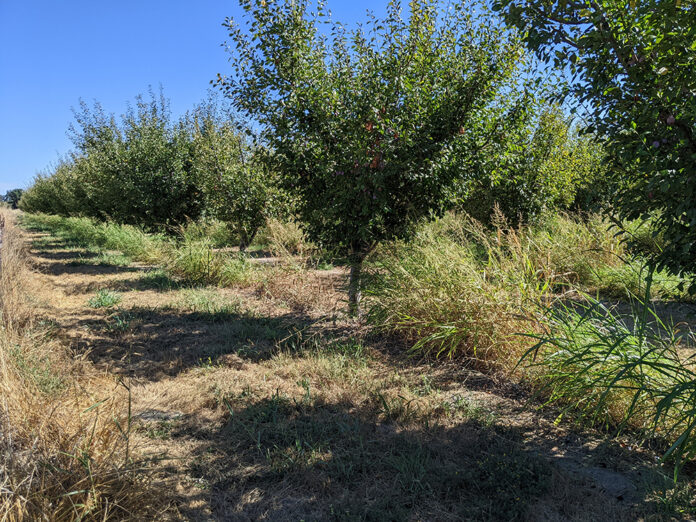
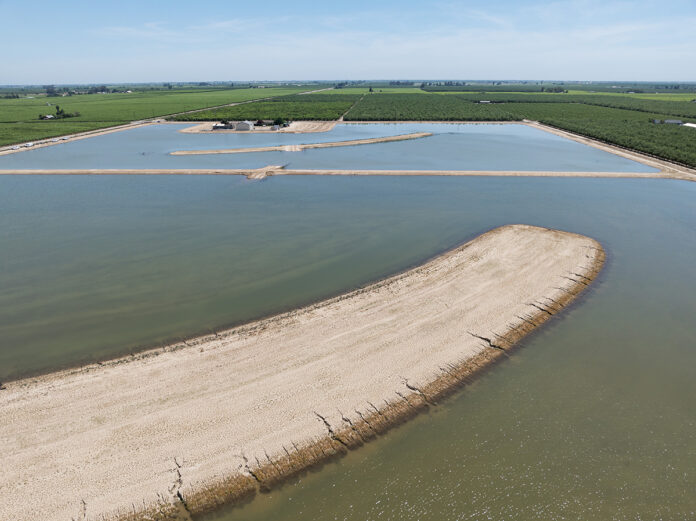
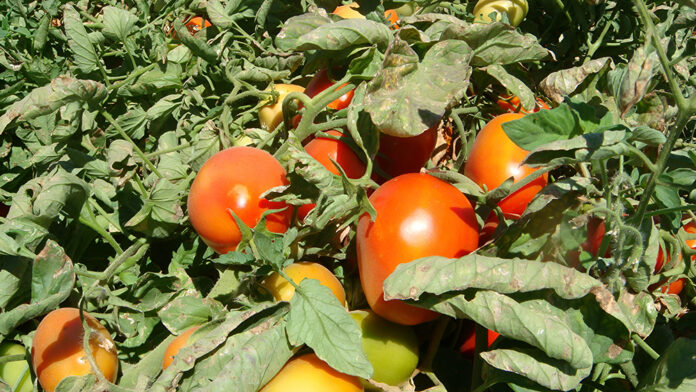
California produce continues to rank among the safest in the world, with 97% of tested fruits and vegetables showing no or minimal pesticide residues, according to the state’s 2023 monitoring report (photo by Neal Kinsey, Kinsey Agricultural Services.)

Last month, the California Department of Pesticide Regulation (DPR) released its annual produce monitoring report for 2023. The report showed about 97% of fruits and vegetables sold in California either had no detectable pesticide residues or had residues well below federal health-protective limits.

DPR collected and tested more than 3,500 unwashed produce samples from across the state. Each sample was analyzed for up to 500 types of pesticides and related compounds. Under U.S. Environmental Protection Agency (EPA) rules, a sample is considered illegal only if pesticide detections exceed strict health-protective “tolerances.”

Highlights from the 2023 Residue Monitoring Program include:

• 39% of samples had no detectable pesticide residues at all.

• 58% had residues, but all were below EPA tolerance levels.

• 3% of samples had illegal pesticide residues.

• Of 1,059 produce samples labeled “grown in California,” less than 1% had illegal residues.

• Of the 96 samples with illegal residues, 83% were from imported produce.

• Of 379 organic samples, 98% met all pesticide requirements.

Understanding the Results
At first glance, “97% safe” sounds impressive, but what does that actually mean? The “97% safe” is the combination of the 39% with “no detectable” and 58% with “residues below EPA tolerances.” To explain it well to friends, neighbors or concerned customers, let’s take a look behind the numbers and unpack a few of the key points.

First, consider the 39% of produce with no detectable pesticide residues whatsoever. Because of advances in science, “no detectable” means more than it did a generation ago. Testing technology has advanced so much that laboratories no longer measure only in parts per million. Now, they regularly are looking for detection residues in parts per billion or even parts per trillion.

To put that in perspective:

One part per billion is the equivalent of a single drop of water in an Olympic-sized swimming pool (about 10,000 gallons).

• One part per trillion is like that same drop of water in 20 Olympic-sized swimming pools.

So when a test says, “no detectable pesticide residue,” it means that even at these incredibly sensitive detection levels, nothing was found.

The next category, 58% of produce with residues below EPA tolerances, also deserves a closer look. EPA pesticide tolerances are not casual estimates; they’re the result of years of rigorous scientific review. To set a tolerance, the EPA examines:

• The toxicity of the pesticide

• How and how often it’s applied

• How much might remain on the food at harvest

Only after confirming there is a “reasonable certainty of no harm” does the EPA set a tolerance limit. These limits are intentionally conservative, often 100 times lower than the level at which any health effect might occur.
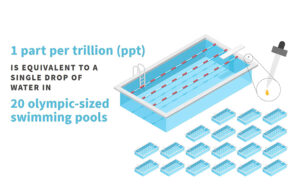
Pesticide residue testing technology has advanced so much that laboratories no longer measure only in parts per million. Now, they regularly are looking for detection residues in parts per billion or even parts per trillion.

California Grown: Even Better
If we look only at produce grown in California, the results are even stronger.

Out of more than 1,050 California-grown samples, over 99% had either no detectable residues or legal levels. Illegal residues were found in just 0.3% of samples. That is a rate so low it’s almost impossible to demonstrate on a chart.

In fact, California-grown produce routinely tests about 10% safer than comparable European Union produce, even though the EU is often held up as a gold standard for food safety.

This is not accidental. California’s growers, consultants, commodity groups and pesticide enforcement agencies have invested heavily in education and compliance programs. While California is known for leading the way in environmental policy, this report makes it clear that the state is also leading in pesticide safety and food protection.

How DPR Chooses What to Test
The DPR’s Pesticide Residue Monitoring Program doesn’t just test the most pristine produce from farmers markets. Its approach is deliberate, and they have a clear target. Sampling focuses on:

• Produce that is frequently eaten by infants and children

• Produce likely treated with pesticides listed under Proposition 65 as carcinogens or reproductive toxins

• Produce that reflects consumption patterns across diverse ethnic and socioeconomic groups

• Produce with a history of illegal residue detections

• Produce imported from countries with past violations

Because of this targeted approach, the program’s results tend to identify potential problems rather than avoid them. Even so, the data shows that California produce remains overwhelmingly safe. In plain terms, California is ensuring that not only more affluent Californians are safe, but populations and communities who have historically been underrepresented are ensured safe and healthy produce. This proactive strategy should increase, not decrease, consumer confidence.

We should applaud DPR, CDFA and the California Agricultural Commissioners (CACs) for their conscious effort to ensure that all sensitive population demographics have access to safe fruits and vegetables.

What Happens When a Violation Is Found
When illegal pesticide residues are found, DPR takes quick action. DPR immediately quarantines the produce to stop it from being sold. Investigators also trace its path through the distribution chain, contacting wholesalers, retailers and distributors to make sure no unsafe produce remains in circulation.

Businesses with repeated violations are enrolled in the Repeat Residue Offender Program, where they undergo compliance interviews and must make operational changes to prevent future violations. They get three months to implement improvements; afterward, they are placed on a 12-month probation. Further violations during that period can lead to more serious enforcement actions.

If the contaminated produce comes from a California farm, the county CAC investigates. They can order the destruction of the crop and recommend additional penalties. These measures send a clear message: California will not tolerate unsafe food in its marketplace.

‘In California, the chances of finding illegal pesticide residues on locally grown produce are less than
one-third of 1%.’

Why This Matters for Everyone
The agricultural community often understands these statistics instinctively. But outside the industry, many people are unsure what “safe” means or don’t understand what’s behind the statistics in the context of pesticides. And frankly, science can be difficult to explain. Some of us may not be comfortable talking about the results to avoid having to try to explain what’s behind these numbers.

By understanding the science and protocols behind these findings, growers, consultants and food safety advocates can help shift that perception. “Safe” here is not a vague reassurance; it’s a data-backed, progressive statement grounded in some of the strictest testing and enforcement standards in the world.

The reality is that California’s system works:

• Testing is frequent, sophisticated and targeted.

• Enforcement is swift and uncompromising.

• Education and prevention are built into agriculture’s culture.

This is good news for growers and a trust-building story for consumers.

Spread the Word
Growers, consultants, industry groups and local officials can help the public understand what these results mean by sharing the context behind the numbers. Clarify that “no detectable residues” means none, even when measuring a single drop of water in 20 swimming pools. Discuss how EPA tolerance levels are designed to protect even the most vulnerable populations, such as infants, pregnant women and historically underrepresented populations.

And highlight the fact that in California, the chances of finding illegal pesticide residues on locally grown produce are less than one-third of 1%. That’s not just a good number; it’s an extraordinary achievement.

California agriculture sustains the state, the nation and much of the world. Reports like this one confirm what the industry has known for a long time: Our produce is abundant, diverse and among the safest anywhere. That’s something to celebrate and, even more importantly, to share.
Biological Nitrogen Fixation: Can Bacteria Help Fertilize Our Crops?

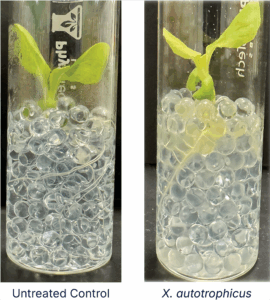
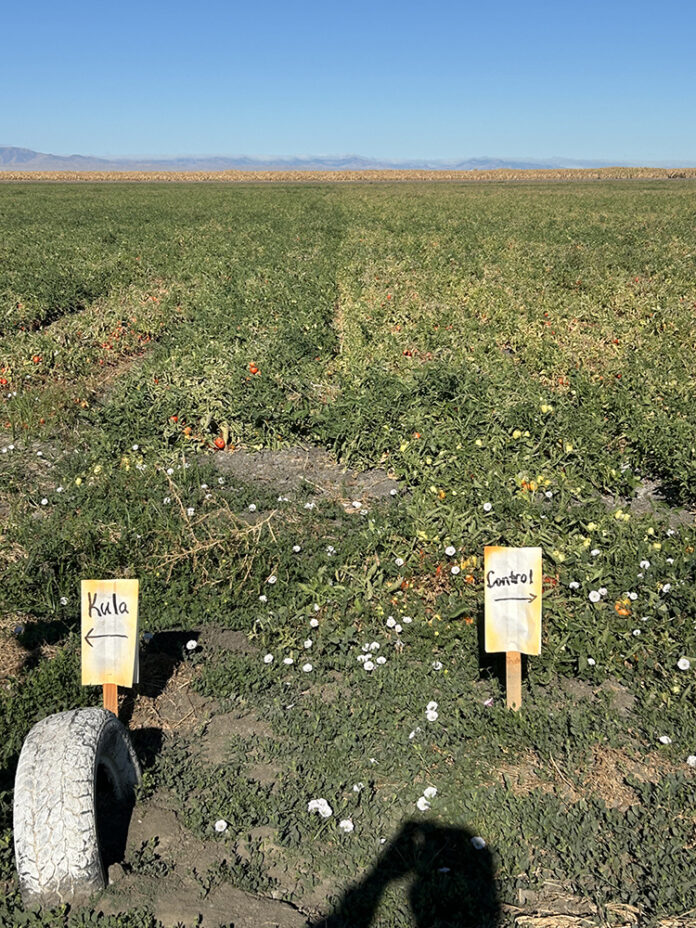
Nitrogen fixing trial using Xanthobacter autotrophicus, a nitrogen-fixing microbe. On the left are X. autotrophicus-applied tomatoes. The control plot on the right saw no nitrogen-fixing microbes applied (all photos courtesy Kula Bio.)

In 1905, German scientist Fritz Haber successfully synthesized ammonia from atmospheric nitrogen gas, an inert form of nitrogen resistant to chemical and biological reactions. Shortly thereafter, BASF chemist Carl Bosch built upon Haber’s work to facilitate large-scale ammonia synthesis, and the process was dubbed Haber-Bosch N fixation. Although synthetic N fixation was initially developed for chemical weapons production, the technology was soon turned toward fertilizer manufacturing.

Suddenly, the essential nutrient most limiting to crop production became available in abundance, and the world’s food supply soared. Haber-Bosch N fixation revolutionized agriculture, but the readily available N fertilizer came at a cost to surface and groundwater resources. Excessive nitrate in farm water runoff disrupts aquatic ecosystems, and nitrate leached down the soil profile to aquifers renders well water unsafe for human and livestock consumption. Increasingly stringent water quality regulations motivate growers to look for new N management practices, and recent research suggests that beneficial N-fixing bacteria could provide a valuable solution.

Synthetic N fixation is a relatively new and disruptive human technology, but microorganisms have relied on biological N fixation for millennia without endangering the surrounding environment. Several types of bacteria, including the well-known rhizobia associated with legumes, convert atmospheric N into plant-available ammonium N. Most ag professionals are familiar with leguminous rhizobia, but there are many other types of bacteria that can contribute N to a wider range of crops.

N-fixing bacteria can be categorized into three main groups: symbiotic, associative and free-living species. Symbiotic N-fixing bacteria live inside plant cells, usually within special organs like root nodules. Associative bacteria live on plant surfaces or in interstitial spaces, while free-living bacteria inhabit rhizosphere soil but do not require direct contact with plant roots. Bacteria in each category fix N for their own use, and plants nearby benefit from the excess. Symbiotic bacteria directly deliver N to the plant, while associative and free-living organisms release bioavailable N at variable rates, depending on soil N concentration and other environmental conditions.

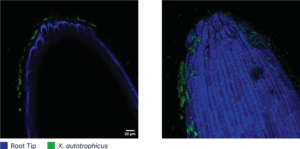
Nitrogen-fixing microbes like Xanthobacter autotrophicus live in the root zone, converting nitrogen from the air into a plant-available form.

Symbiotic Nitrogen Fixers
Symbiotic N-fixing bacteria form a mutually beneficial relationship with plants by providing ammonium in exchange for a carbohydrate-rich energy source. Symbiotic N-fixing partners include rhizobia with legumes, Frankia with alder, and cyanobacteria with cycads. Rhizobia and their leguminous hosts are well researched and commonly used in agriculture, contributing between 80 to 300 pounds N per acre when effective nodulation is achieved. Individual rhizobia species and strains are adapted to coexist with specific legumes, and some partnerships are more effective than others. For example, Sinorhizobium meliloti provides alfalfa with 200 to 300 pounds N per acre, meeting most if not all the crop’s growth requirement. Conversely, garbanzo beans colonized with Bradyrhizobium japonicum receive just 25 to 80 pounds N per acre through atmospheric fixation. Biological N fixation potential is usually high in legumes but depends on successful nodulation and favorable environmental conditions. Rhizobia depend on their plant host for survival, so conditions that stunt crop growth, such as drought, extreme temperatures or pathogen pressure, will also reduce N fixation. Growers can get the best chance at maximizing N fixation by inoculating seeds with the right rhizobia strain to match their crop. Select a formulation that includes a sticker with a carbohydrate food source to keep the bacteria well fed and close to the seed until roots have grown enough to enable nodulation. Inoculants should be stored at room temperature out of direct sunlight and applied to seed less than 24 hours before planting to maintain viability.

‘…it is clear that under the right circumstances, [nitrogen]-fixing bacteria can help growers produce healthy crops and offset [nitrogen] fertilizer requirements.’

Associative Nitrogen Fixers
Legumes accommodate rhizobia by growing nodules to host the bacterium, but other crops can benefit from biological N fixation without changing their physiology. While symbionts like rhizobia live inside plant cells, associative microbes colonize the surfaces of roots and foliage or live in interstitial spaces between plant cells. Many of these N fixers associate primarily with grasses, such as wheat, corn and rice, but some may be compatible with a wider range of plant types. Researchers have observed that associative bacteria such as Azospirillum, Bacillus and Gluconobacter can provide roughly 20% to 25% of the N requirement in both corn and rice. One study showed that inoculating corn with Pseudomonas and Bacillus megaterium resulted in equal crop dry weight and chlorophyll concentration as applying 33% N fertilizer. Sugarcane colonized by Gluconacetobacter diazotrophicus may receive an even higher N supply at over 150 pounds N per acre, according to a report from North Dakota State University. Research investigating the biological links between associative bacteria and corn found that a particular variety grown in Mexico promotes microbial colonization and N fixation by excreting mucilage on aerial roots to attract associative microbes and create the anaerobic environment required for N fixation. These observations generate interest in breeding crop varieties better adapted to facilitate biological N fixation and reduce reliance on N fertilizer.

As roots grow, nitrogen-fixing microbes like Xanthobacter autotrophicus grow with them, continually colonizing roots to maintain proximity to active nutrient exchange zones.

Free-Living Nitrogen Fixers
N-fixing bacteria that live in the soil and do not require direct contact with plants can also offset N fertilizer requirements, given the right environmental conditions. N fixation requires anaerobic conditions because the key nitrogenase enzymes involved in the process cannot function in the presence of oxygen. Most free-living bacteria successfully fix N in saturated soils or when they find anaerobic microenvironments in otherwise aerated soil. Several types of bacteria including Clostridium, Herbaspirillum and Azospirillum thrive in flooded soils such as rice paddy fields, fixing enough N for their own use while meeting some of the crop’s N demand as well.

Not all free-living N fixers require a field. Bacteria in the genus Azotobacter live in aerated soils and fix atmospheric N even in an oxygen-rich environment. Azotobacter chroococcum, A. vinelandii and other aerobic species are available as soil inoculants. Studies suggest that they usually fix around 20 pounds N per acre per year, but one study reported a much higher N fixation rate of over 50 pounds per acre per year. Sometimes these bacteria fix more than enough N for their own use, allowing plants to share the excess. More N is released as bacterial populations die and turn over, allowing other soil microorganisms to mineralize the N stored in their bodies into plant-available forms.

Free-living soil bacteria may not provide as much plant-available N as symbiotic and associative bacteria, but they benefit plants in other ways. Azotobacter and Azospirillum species are well known for stimulating crop growth by secreting plant hormones such as cytokinins, gibberellins and indole acetic acid. These beneficial bacteria also induce plant stress defense mechanisms and aid in pathogen suppression. Some free-living bacterial inoculants available on the market may provide biostimulant effects that justify application in their own right and outweigh the benefit of N fixation alone.

Research into biological N fixation in agricultural crops still has a long way to go, but it is clear that under the right circumstances, N-fixing bacteria can help growers produce healthy crops and offset N fertilizer requirements. Regulatory pressure to cut back on N use, as well as high fertilizer prices, motivates growers and consultants to look for new N management tools, and beneficial bacterial inoculants are worth serious consideration. Successful colonization and N fixation depend on field conditions and the degree of compatibility between microbial strain and crop type. Look for inoculants that have been tested on your crop and inquire about the bacteria’s tolerance to temperature, soil pH, moisture and ag chemicals. Further research and field trials are needed to improve consistent efficacy, but biological N fixation has the potential to become an important tool in crop production and environmental protection.

References
Aasfar A, Bargaz A, Yaakoubi K, Hilali A, Bennis I, Zeroual Y and Meftah Kadmiri I (2021) Nitrogen Fixing Azotobacter Species as Potential Soil Biological Enhancers for Crop Nutrition and Yield Stability. Front. Microbiol. 12:628379. doi: 10.3389/fmicb.2021.628379

Evers GW. Cool Season Legume Nitrogen Fixation. Texas A&M AgriLife Research and Extension Center at Overton. Retrieved 7/31/25. https://overton.tamu.edu/faculty-staff/gerald-wayne-evers/cool-season-legumes/nitrogen-fixation/

Guo K., Yang J., Yu N., Luo L., and Wang E. (2023). Biological nitrogen fixation in cereal crops: Progress, strategies, and perspectives. Plant Comm. 4, 100499.

Mahmud K, Makaju S, Ibrahim R, and Missaoui A. (2020). Current Progress in Nitrogen Fixing Plants and Microbiome Research. Plants. 9, 97. doi:10.3390/plants9010097

Rethwisch M. (2024) New/Recent Nitrogen Fixing Bacteria Products for Agriculture. University of California Agricultural and Natural Resources, Imperial County Agricultural Briefs. 27:1.

Science History Institute. (2025, July 29). Fritz Haber. Scientific Biographies, Science History Institute. https://www.sciencehistory.org/education/scientific-biographies/fritz-haber.

Yuja, S. 2023. Nitrogen-fixing organisms for sale? North Dakota State University Impact Stories. Jan 22, 2023. https://www.ndsu.edu/agriculture/ag-hub/impact-stories/nitrogen-fixing-organisms-sale

The Right Herbicide at the Right Time: Suppression of Established Johnsongrass Using Rimsulfuron

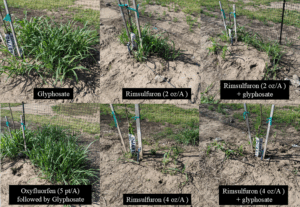
Rimsulfuron applications in early March resulted in about a 50% reduction in johnsongrass weed coverage and biomass that lasted past the end of the study, which was in early May (all photos by R.J. Hill.)

Johnsongrass (Sorghum halepense L.) is a perennial grass weed that has troubled California weed managers since the late 19th century, particularly in perennial systems where mechanical control options are limited. Johnsongrass infestations can be difficult to eradicate because the plant spreads through underground stems called rhizomes and abundant seed production from mature plants. Johnsongrass seedlings resemble corn seedlings and grow rapidly. Flowering stalks can reach six feet above ground and can produce hundreds of seeds each. Dormant seeds can survive for at least six years, and some seeds can survive ingestion by birds and mammals. Herbicides are the main tools used to manage johnsongrass in orchards and vineyards. Many preemergent herbicides can control johnsongrass seedlings but are ineffective on perennial plants. However, the discovery of glyphosate has led to powerful systemic herbicides that can provide good control of seedlings and those troublesome johnsongrass rhizomes. Despite this being the case, johnsongrass is still not easily eradicated once it has a strong foothold.

Are There Any Herbicide Resistance Concerns?
Glyphosate herbicides like Roundup are the primary tools used to eradicate pesky johnsongrass infestations, and efficacy has been reliable in California. However, elsewhere in the United States and worldwide, several cases of glyphosate resistance have been identified. In all cases of glyphosate-resistant johnsongrass that have been published, the reduction in control is due to a reduced effect of the herbicide on roots rather than the foliage. This happens because the herbicide applied to the leaf or stem is not transported into the roots and rhizomes in the quantities that would normally be expected. So in a resistant population, the aboveground portion of the plant can be fully controlled, but the rhizomes are relatively unaffected. This type of resistance is rather insidious and can be difficult to detect. Again, this phenomenon has not been identified in California johnsongrass populations, but weed managers ought to keep in mind that this species has a proclivity toward this form of resistance.

‘Only plots that received rimsulfuron in spring had any significant reduction in johnsongrass coverage or biomass.’

Post-Emergent Herbicides for Johnsongrass Control
Resistance management principles like herbicide rotation and tank mixing should be followed even when resistance has not been identified or suspected, so we should review the options available for chemical control of johnsongrass.

Three groups of herbicides are available for systemic post-emergent control of johnsongrass:
• Glyphosate-based herbicides (Group 9)
• Grass-selective herbicides like clethodim and fluazifop (Group 1)
• ALS inhibitors like rimsulfuron (Group 2)

Many growers I’ve spoken to utilize glyphosate and grass-selective herbicides to control johnsongrass in their orchards, but ALS inhibitor use specifically on johnsongrass in orchards and vineyards is not common. Research trials I installed this summer indicate all three of these herbicides can be similarly effective for post-emergent applications, though rimsulfuron was not as consistent as the others, an effect that is likely dependent on the size of the johnsongrass at treatment. Though glyphosate gave the best above-ground kill of the three, by the end of the trial (60 days after treatment) no differences in johnsongrass weed coverage or biomass was identified between treatments.

Though I received inconsistent results from my post-emergent rimsulfuron treatments, ALS inhibitors like rimsulfuron are interesting herbicides because they often have both soil residual activity and post-emergent activity. Soil residual herbicides, also called preemergent herbicides, can act on weeds as they begin to germinate, killing the plants when they are at their most vulnerable stage. In orchards and vineyards, rimsulfuron herbicides (e.g., Matrix, Revolt, Hinge) are often used in combination with other soil residual herbicides like indaziflam (Alion), flumioxazin (Chateau) and oxyfluorfen (Goal) during the winter months, allowing long-term control of annual weeds far into the growing season. In other crops like processing tomatoes, rimsulfuron herbicides are applied for their post-emergent activity and realize little of their residual potential due to the absence of rainfall to activate the herbicide in the soil. Rimsulfuron herbicides are commonly labeled for use to control johnsongrass seedlings, but my recent research results have demonstrated that these herbicides also have suppressive effects on established johnsongrass populations when applied at particular timings.

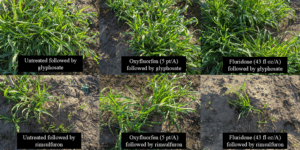
These pictures, taken in April 2025, are 45 days after rimsulfuron and glyphosate treatments and 75 days after oxyfluorfen and fluridone treatments. Rimsulfuron is shown here exhibiting a strong suppressive effect on perennial johnsongrass when applied soon before or just after the resumption of growth from belowground rhizomes. Preemergent treatments applied in winter show no added benefit in this field, suggesting most of the effect here is on established johnsongrass, not seedlings.

What Preemergent Activity Does Rimsulfuron Have on Established Johnsongrass?
To provide better recommendations on how to best use rimsulfuron and other residual herbicides to target johnsongrass, I established a set of trials in prune and walnut orchards in Shasta and Tehama counties in winter and spring 2025. I had two primary goals:
• Test if early spring rimsulfuron applications were effective for control of johnsongrass.
• Determine whether treatments were primarily affecting seedlings or established populations.

In winter (early February), I applied preemergent herbicides, including either fluridone (Brake On!, 43 fluid ounces per acre) or oxyfluorfen (Goal 2XL, 5 pints per acre) as well as an untreated control, to account for any seedlings that might germinate through the duration of my trials. In spring (early March), I applied either rimsulfuron (Revolt, 2 or 4 ounces per acre) or glyphosate (Roundup Powermax 3, 2 pt/A) just before or after shoot emergence from underground rhizomes. Glyphosate was used as a control treatment to account for any post-emergent activity of rimsulfuron on emerged shoots to evaluate only the soil residual effects of rimsulfuron. Very little plant material was available for direct absorption of herbicide through leaf tissue at the spring timing, so this is not a preferred use of glyphosate but was simply used as a more suitable control than untreated johnsongrass. Glyphosate can be very effective in the spring but requires adequate leaf material for absorption into the plant. All together four trials were installed, at three different locations. All treatments were accompanied by a half inch of rain within a week of application, washing the herbicide off thatch and leaves and down into the soil.

Rimsulfuron is shown here exhibiting a strong suppressive effect on perennial johnsongrass when applied soon before or just after the resumption of growth from below-ground rhizomes. Rates of 4 ounces per acre were much better than 2 ounces per acre and the addition of glyphosate on average gave very little benefit, likely due to incomplete johnsongrass emergence at the treatment timing.

In all cases, the rimsulfuron treatments were responsible for most of the weed control in these plots. Plots that received winter preemergent treatments were only marginally different from plots that were untreated in the winter, if followed by glyphosate in the spring. Only plots that received rimsulfuron in spring had any significant reduction in johnsongrass coverage or biomass. This suggests the effects of rimsulfuron observed on johnsongrass populations were not primarily from soil residual effects on seedlings but that the perennial rhizomes themselves were affected. Winter treatments added additional johnsongrass control when combined with rimsulfuron only in two of the four trials, and this effect was seen later in the spring as seedlings began to germinate.

The primary takeaway from this research was that rimsulfuron applications in early March resulted in about a 50% reduction in johnsongrass weed coverage and biomass that lasted past the end of the study, which was in early May. This was a reduction relative to the control treatment with glyphosate alone, suggesting post-emergent absorption of rimsulfuron is likely not the primary mechanism of control but rather activity in the soil. Rates of 4 ounces per acre were much more effective than 2 ounces per acre, and the addition of glyphosate to the tank mix seemed to slightly increase efficacy.

These results are not a silver bullet for johnsongrass management but can fit in with an integrated management plan. Glyphosate and grass-selective herbicides provide consistent mid-season control and should be used to keep established johnsongrass from setting seed. Burndown herbicides like glufosinate (Rely) or mechanical control can also be utilized to prevent seed setting. Rimsulfuron herbicides seem most effective in early spring just before or after shoot emergence followed by adequate rain or irrigation. It is likely that the window of opportunity for this type of application will persist for much of the spring, but this will take further research to determine. With these considerations, it still takes a good deal of diligence to eliminate a well-entrenched johnsongrass infestation. If you have concerns about herbicide resistance, be sure to reach out to your local UCCE farm advisor.

Letter from the Publisher

Using precision ag and weather data, reliable advisers turn information into clear actions that manage risk and improve profit.

Dear consultants,
What an exciting time to be in agricultural consulting! While our industry faces its share of challenges, from water management to evolving regulations and fluctuating input costs, I see tremendous opportunities for consultants who are ready to expand their value proposition.

The evolution happening in our field is remarkable. Growers today are looking for more than technical expertise; they want strategic partners who understand both the agronomic and business sides of their operations. This shift opens opportunities for consultants willing to broaden their skillset and deepen their client relationships.

Here’s what I find most encouraging: Every recommendation we make has the potential to create significant value. When you develop a pest management plan or suggest a nutrition program, you’re directly impacting your client’s success. The consultants who are thriving are those who can articulate this value clearly, connecting their recommendations to measurable outcomes and return on investment.

Consultants who pair agronomy with business needs and explain ROI become the strategic partners growers rely on (all photos by M. Lies.)

We’re living in a golden age of agricultural data. From precision agriculture tools to weather monitoring systems, we have access to information that previous generations could only dream of. The key is learning to transform this wealth of data into actionable insights that help growers make confident decisions. I’m seeing more consultants master this skill every year, and their clients are taking notice.

What hasn’t changed, and what never will, are the fundamentals of great client relationships. Reliability, clear communication and genuine care for your clients’ success remain the foundation of sustainable consulting practices. The consultants building lasting businesses are those who show up consistently and communicate proactively.

Building a strong professional network continues to pay dividends. The most successful consultants I know maintain connections across the agricultural spectrum, from input suppliers to processors, from fellow consultants to industry associations. These relationships don’t just provide valuable market intelligence; they create opportunities to deliver enhanced value to clients.

Your professional reputation is one of your most valuable assets, and the good news is it’s completely within your control. Speaking at industry events, sharing insights through writing and actively participating in agricultural organizations all contribute to building credibility and attracting quality clients.

Growers today are looking for more than technical expertise; they want strategic partners who understand both the agronomic and business sides of their operations.

The business mindset is becoming increasingly important in our profession. Whether working with large commercial operations or smaller family farms, successful consultants are those who understand the economic pressures their clients face and can balance agronomic recommendations with practical business considerations.

Looking ahead, I’m optimistic about our industry’s future. Growers will always value professionals who help them improve profitability, manage risk and achieve their operational goals. The consultants who combine technical expertise with business acumen, who build trust through reliability and who continuously invest in their professional development are the professionals who will lead our industry forward.

The opportunities are there for those ready to seize them. Let’s make the most of this exciting time in agricultural consulting.

Here’s to your continued success,
Jason

Want five 5-minute fixes to recommend to your growers?

0


When a tank runs dry at 5 a.m. or a line gets cut overnight, your phone lights up. Many of those emergencies are preventable with basic monitoring and a few smart alerts, tools most growers can adopt without an overhaul. That’s why Farmblox created five free, 5-minute mini-webinars you can recommend today. Each video covers one practical fix with no IT required and aligns with the guidance you already give in the field.

What’s inside (one topic per video):

  • Refill alerts that stop surprise runouts
  • Real-time theft notifications (cut wire / rapid drain)
  • Phone-based checks for tanks & irrigation status
  • Moisture visibility that guides irrigation sets
  • Usage reporting to keep SGMA manageable

How to use with growers (one-afternoon plan):

  1. Pick one pain point: chronic runout tank, hard-to-check block, or a theft-prone spot.
  2. Pilot one monitor and set one threshold they’ll act on.
  3. Send one alert (text/email). Tune if it’s noisy.
  4. Review in a week: Did it prevent a runout, save a trip, or clarify a set? If yes, expand only where it pays.

Why five minutes?
Because your and your growers’ time is tight. Each video is focused, copyable, and designed to be forwarded with a one-line note: “Start here: 5 minutes.”

Watch the free 5-minute mini-webinars: myaglife.com/farmblox

APIX Biosciences NV announces new advances in Honeybee Nutrition

0
APIX Biosciences NV announces new advances in Honeybee Nutrition

WINGENE, Belgium, Aug. 20, 2025 (GLOBE NEWSWIRE) — Belgian agri-technology company APIX Biosciences NV, active in Europe and the United States, proudly announces the publication in Nature, by APIX Biosciences’ Scientific Founder Prof. Geraldine Wright and her team, on the production of plant-sterols in a yeast synthetic biology platform and the role of these phytosterols in honeybee nutrition (https://doi.org/10.1038/s41586-025-09431-y). APIX is pleased to have acquired and integrated this technology in its portfolio of technologies.

“Sterols are one of many nutrient classes honeybees require in their diet. This publication describes how to genetically engineer yeast to make phytosterols. Experiments feeding these yeasts to honeybees shows that the presence of these sterols can improve their reproduction,” says APIX Biosciences’ Chairman Thierry Bogaert. “This confirms and extends the work that APIX Biosciences NV published last May in the Proceedings of the Royal Society B using these phytosterols produced through chemical synthesis (https://doi.org/10.1098/rspb.2024.3078)”.

APIX Biosciences NV, a privately held life sciences company based in Belgium, has developed a complete Pollen Replacing Feed for honeybees to mitigate the recurring shortages of adequate pollen to feed honeybees, a livestock that is essential for the pollination of many crops. Large-scale field tests in winter survival trials by leading commercial beekeepers show that the APIX feed reduces colony mortality by 50% compared to diets that are current standard practice. The APIX Pollen Replacing Feed offers beekeepers and growers of crops that are pollinated by honeybees a fundamental solution to the chronic undernutrition of bee populations.

“The Pollen Replacing Feed that APIX Biosciences has exhaustively field tested and that it targets to launch in the USA in 2026 does not use the synthetic biology technology developed in the publication published in Nature today,” comments Jan Bogaert, CEO APIX Biosciences.

“APIX Nutrition llc, a wholly owned subsidiary of APIX Biosciences NV, was proud to be industrial partner of this research via BBSRC iCase grant (BB/M011224/1),” concludes Jan Bogaert, CEO of APIX Biosciences. “APIX Biosciences continuously adds to its portfolio of ingredients, tools and technology and continuously invests in improving its Pollen Replacing Feed over time.”

About APIX Biosciences NV
APIX Biosciences is a Belgian agri-technology company headquartered in Wingene Belgium, with operations in Europe and the United States. The company has developed an advanced, science-based Pollen Replacing Feed product for honeybees. This offers a fundamental solution to the chronic undernutrition of bee populations in North America and Europe—an important factor in the decline of pollinators. In doing so, APIX Biosciences is contributing to sustainable beekeeping and global food security.

Press Contact:

Jan Bogaert – CEO – APIX Biosciences NV
Email: Jan.Bogaert@apixbiosciences.com
Phone: +32 495 57 75 33

Wim Goemaere – CFO – APIX Biosciences NV
Email: Wim.Goemaere@apixbiosciences.com
Phone: +32 475 95 12 04

2026 Advanced School on Microirrigation for Crop Production

0

Class Lectures: March 30 – April 1, 2026
Field Trips: April 2 – 3, 2026

Class lectures will be held in the UC Davis Conference Center. Field trips will be in the San Joaquin Valley and Central Coast of California.

Instructors of the School are professionals with extensive experience on principles and
practical applications of microirrigation for resourceefficient crop production.

What you will learn:

  • Technical aspects of water delivery systems to allow for successful adoption and management of microirrigation systems
  • Soil-water movement and soil-plantwater relations with microirrigation
  • Microirrigation systems design, operation, maintenance, automation, and performance evaluation
  • Methods and tools for microirrigation scheduling
  • Managing microirrigation for different crops (field and agronomic crops; vegetable crops; berry crops; fruit crops; nut crops; vineyards)
  • Chemigation and fertigation
  • Salinity management with microirrigation

Attending this school will provide:

  • 3 days of practical class lectures on principles and implementation of microirrigation systems and management practices for crop production
  • 2 days of field demonstration visits (one day in the San Joaquin Valley for modernized irrigation delivery systems, and fruit and nut crops; one day in the Central Coast for vineyards, vegetable crops, and berries)

Questions? Please contact:
Daniele Zaccaria – UC Davis: dzaccaria@ucdavis.edu
Mary Ann Dickinson: maryann@dickinsonassociates.com

John Deere Partners With the Reservoir to Accelerate High-Value Crop Innovation

0
John Deere Partners With the Reservoir to Accelerate High-Value Crop Innovation

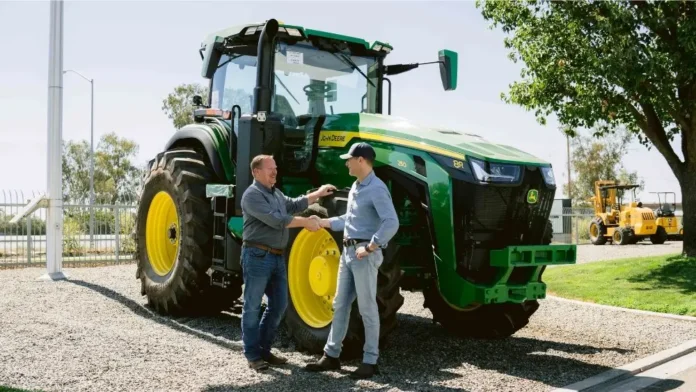
MOLINE, Illinois — John Deere (NYSE: DE) announced today the start of a strategic collaboration with the Reservoir, a California-based agricultural technology on-farm incubator platform that brings together grower networks and deep tech R&D studios to accelerate innovation in high-value crop (HVC) agriculture.

The partnership links John Deere’s innovative world-class agricultural technology and equipment, and deep grower relationships with the Reservoir’s startup residents, field testing platforms and commercialization support. Through this collaborative effort, John Deere and the Reservoir aim to help HVC growers adopt new solutions that help them do more with less by addressing labor shortages, increasing efficiency and improving long-term sustainability.

“We view high-value crops as an important growth area for agriculture, and an area where innovation is needed and can have a direct, measurable impact on growers’ resilience and productivity,” said Sean Sundberg, business integration manager at John Deere. “This partnership gives us a front-row seat to the next generation of agricultural technology, and an opportunity to work alongside growers and entrepreneurs to ensure future solutions are practical, scalable and built to last.”

Through the agreement, John Deere becomes the exclusive original equipment manufacturer to the Reservoir, granting branding opportunities across the Reservoir’s Salinas facility and future locations. John Deere will have access to early stage startups, co-developed R&D programs and curated field days for technology demonstrations.

“John Deere’s investment in the Reservoir is a vital strategic step toward making sure specialty crop growers have a fighting chance amid our industry’s labor shortage,” said Walt Duflock, senior vice president of innovation at Western Growers. “The California agricultural technology landscape will thrive thanks to this kind of collaborative effort.”

This partnership brings together John Deere’s leadership in building next-generation agricultural technology ecosystems with the Reservoir’s ability to connect startups, growers and technologists in real-world production environments. By pairing John Deere’s advanced precision ag and automation capabilities with the Reservoir’s on-farm R&D team, the collaboration creates a powerful platform for developing, testing and scaling solutions that address the most pressing challenges in HVCs. This collaboration unites innovation infrastructure with a thriving network of founders, growers and ag labor innovators, signaling a shared long-term commitment to strengthening the productivity, efficiency and sustainability of HVC production in California and beyond.

Founded in 2024, the Reservoir connects startups, growers, and technologists to develop and test solutions for HVCs in real-world production environments. John Deere and the Reservoir found alignment through their shared commitment to advancing agricultural crop productivity, combining Deere’s advanced equipment and grower relationships with the Reservoir’s field-based R&D and deep tech network.

“At the Reservoir, we’re focused on accelerating innovation for HVCs and the long-term sustainability of California agriculture,” said Danny Bernstein, CEO of the Reservoir. “John Deere brings trusted technology, technical expertise and a real commitment to grower support and strength. This partnership strengthens the foundation we’re building and helps unlock the next generation of ag technology in service of our food system.”

The collaboration further underscores John Deere’s broader U.S. commitment to invest more than $20 billion in domestic manufacturing over the next decade. By deepening innovation partnerships in key agricultural regions like the Salinas Valley in California, John Deere is advancing U.S. and global food production efficiency while creating high-quality jobs and maintaining leadership in agricultural technology.

ABOUT JOHN DEERE

It doesn’t matter if you’ve never driven a tractor, mowed a lawn, or operated a dozer. With John Deere’s role in helping produce food, fiber, fuel, and infrastructure, we work for every single person on the planet. It all started nearly 200 years ago with a steel plow. Today, John Deere drives innovation in agriculture, construction, forestry, turf, power systems, and more.

For more information on Deere & Company, visit us at www.deere.com/en/news.

ABOUT THE RESERVOIR:

The Reservoir is a startup incubator and venture capital fund focused on helping agtech startups succeed where agriculture happens—in the field. Reservoir Farms is the world’s first on-farm robotics incubator, starting in the Salinas Valley and expanding to other key regions like the Central Valley. Reservoir Ventures backs startups solving real problems in high-value crops. By combining R&D space, hands-on grower input, and early-stage capital, the Reservoir helps turn promising ideas into tools for the growers who feed the world.

Learn more at https://reservoir.co.

CONTACTS
Darius Lane, Public Relations Manager, Small Ag and Turf, agpr@johndeere.com

Tanner Kersey-Lopez, Editorial Contact, tkerseylopez@bader-rutter.com

Building a Strategic Path to SGMA Compliance

0
Apollo Ag Technologies’ Kevin Rost says consultants can help California growers prepare for the 2026 Sustainable Groundwater Management Act compliance deadline by guiding technology adoption, improving data collection and encouraging participation in local Groundwater Sustainability Agencies (photo courtesy Xavier Mascareñas, California Department of Water Resources.)

With California’s 2026 Sustainable Groundwater Management Act (SGMA) compliance deadline fast approaching, some growers remain uncertain about what is required and how to prepare. Consultants have an opportunity to guide growers through both the technical and strategic steps needed to meet the regulations.

“Compliance with the Sustainable Groundwater Management Act is a critical conversation that everyone in the ag industry should be having right now,” said Kevin Rost of Apollo Ag Technologies. “We can’t defend ourselves or create strategic plans without measuring.

“The basics are prioritizing field level monitoring and installing flow meters and soil moisture probes. We have a lot of good tools right now. We have companies like Swan Systems and Apollo who have irrigation scheduling and tracking tools to help improve efficiency that way.”

For consultants, recommending and helping implement these tools can be the first step in guiding growers toward compliance. Rost said such monitoring allows growers to become more efficient for that specific field, soil type and crop, while also creating evidence for regulatory defense.

“It also becomes evidence. We need to have accurate records to be able to defend ourselves against regulation and be compliant with regulations,” he said.

Rost said real-time technologies, such as flow meters, soil probes and pressure switches, help growers remotely track water use and system performance, while NDVI imaging and drone data can detect real-time crop stress. Automation in both irrigation and fertigation, he added, boosts efficiency, reduces labor and provides records growers can use to defend their practices.

“I’ve seen grower operations where they’re setting up a command center almost,” Rost said. “They have a designated person monitoring these types of technologies. We also have NDVI and drone imaging now that are popular and useful to detect real-time crop stress based on these practices.

“The next step would be to automate the fertilizer injections along with the water so that it’s all efficient. It’s recorded. You can analyze the data, find ways to become more efficient.”

Consultants can also help clients build a strong presence in local Groundwater Sustainability Agency (GSA) processes. Rost stressed that grower participation is essential but often lacking.

“I’d really like to see more participation from growers,” he said. “If we’re not at the meetings and sharing our concerns and our plans and what’s working real time for the farmer, honestly your voice is just not going to be in.

“Rather than just letting the GSAs develop whatever, the GSAs actually rely on the grower data. The more we can participate, I think it’s going to be better.”

Rost acknowledged that mistrust between growers and agencies can make collaboration difficult. Consultants can help bridge this divide by fostering communication and explaining how GSA decisions affect farm operations.

“It does take time,” Rost said. “It does take time to learn these things, train your staff, get all the bugs worked out and get your actual irrigation planning and scheduling so precise that you can handle restrictions. You don’t want to jump in at the last minute. We’ve got to have time to prepare ourselves and to experiment and to make improvements over time, and we’ve been missing that boat, I think.”

Listen to the full conversation with Rost on the MyAgLife Daily News Report.

Stress Mitigation by Communicating with Plant Genes: A Letter to Crops

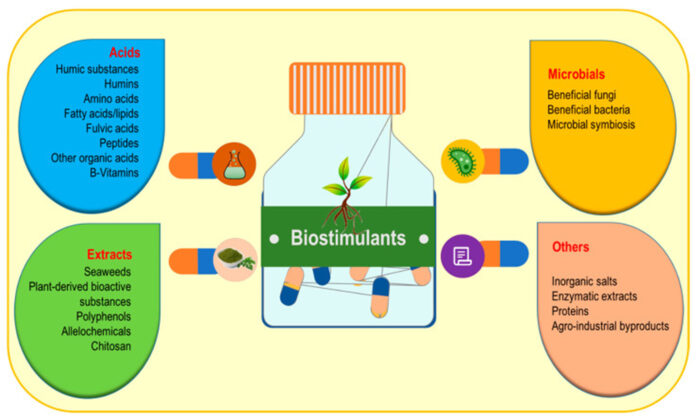
Major categories of biostimulants

Hello crops. Stress and potential damage are on the way. We have some extreme heat conditions headed our way. We know what is going to happen. Our reactive oxygen species (ROS) will react and develop an imbalance. What we can expect from this abiotic stress can influence our production. If severe enough and left unchecked, we could even see death of the plant. Hopefully our crop advisors and managers recognize the potential problem and communicate with us.

First, they need to understand ROS and the negative impact it can have on the crop. This includes cellular damage at varying levels, some as severe as plant death and some as mild as damage that might allow the plant to survive but can cause poor-quality fruit, nuts or vegetables to develop. High ROS levels can damage cell membranes (lipid peroxidation), nucleic acids (DNA) and proteins, leading to cell dysfunction and potential death.

Oxidative stress can be caused by the imbalance of ROS production. This can negatively impact plant growth, development and survival. Damage this year from the heat could seriously reduce flowering and crop set in the next season. ROS target DNA, RNA, proteins and lipids, disrupting their functions and causing cellular damage. It might be so mild that we think we are having a good crop year. The fact is, even a slight impact can reduce yield and quality so our full potential cannot be achieved.

ROS act as signaling molecules. These signals trigger transduction pathways so we can respond appropriately to abiotic and biotic stresses. ROS also become involved in regulating plant development, cell division, differentiation and elongation. Cell division directly affects fruit and nut size, leaf size and even bud size. The process of cell differentiation has many key roles in our plant development. Meristematic cells at the tips of roots and shoots can reduce elongation so branches can be short or not grow. Interference in root hair tips can reduce our ability to take up adequate nutrients.

Imbalance can prevent structural change in our cells so we cannot produce stronger cell walls for tree limbs to support our crop load or perhaps reduce a wheat crop stem’s ability to withstand wind or water weight, so we lose production through lodging. Some altered and prevented cell differentiation might reduce water transportation, nutrient storage and our defense.

Microbial biostimulant-induced mechanism for increasing abiotic stress tolerance

The Role of ROS in Photosynthesis, Gene Expression and Plant Defense
ROS can have both positive and negative impacts on photosynthesis. While excess ROS can damage photosynthetic components, they also play a role in signaling pathways that allow plants to acclimate to environmental changes and even serve as a form of protection against excess light. An excess of ROS could result in damage to the photosynthetic machinery. Damage to proteins, amino acid residues, lipid peroxidation and DNA could impair our efficiency, capture and electron transport.

ROS have positive roles such as chloroplast-nucleus signaling pathways. These pathways communicate changes in environmental conditions such as the high heat coming our way. They can signal high light stress and initiate our internal responses to protect ourselves. They are the trigger that signals pathways to allow us to acclimate to environmental stress like high light and drought. ROS communicate to us by modulating gene expression. We have defense mechanisms against biotic and abiotic stressors, including infections and pathogens.

Again, when this ROS balance is off it can seriously damage us. So how can our crop consultants help us? It is called communication. This communication can be achieved by a process called gene upregulation. In gene regulation, upregulation refers to an increase in the expression of a gene, leading to more protein production while downregulation refers to a decrease in gene expression, leading to less protein production. Essentially, upregulation “turns on” a gene while downregulation “turns off” a gene.

To explain, we have these examples: Increased expression is a higher level of transcription (RNA production) or translation (protein production) of a gene. More proteins are encoded by that gene. An upregulation can occur when a cell needs to produce more receptors to become more sensitive to a hormone. This can be triggered by signals within the cell itself or other cells as well as by environmental clues.

Downregulation involves lower levels of transcription or translation, which is the reverse of upregulation. Fewer proteins are therefore encoded. Now signals change so a decrease in production of receptors makes a cell less sensitive to that same hormone. Since the downregulation can be triggered by the same factors and the signals come from the same sources, upregulation and downregulation are two sides of the same coin.

Acid-related biostimulant-mediated mechanisms for increasing abiotic stress tolerance of plants

Upregulation
Purpose: Increases the production of specific proteins often in response to stress or specific signals to promote adaptation and survival.
Examples: Plants may upregulate genes involved in defense against pathogens (like R-genes in tomato and potato) or stress tolerance (like those involved in cold or heat stress).
Mechanism: Can involve increased transcription (the process of creating mRNA from DNA) or increased translation (the process of creating protein from mRNA) or both.

Downregulation
Purpose: Decreases the production of specific proteins, often to reduce the intensity of a particular process or to conserve resources.
Examples: Plants may downregulate genes related to growth or development when facing stress, such as drought or nutrient deficiency.
Mechanism: Can involve decreased transcription or translation or both, or by affecting the stability of the mRNA or the produced protein.

Regulation and Examples
Regulatory genes: Many genes are involved in regulating the expression of other genes. These regulatory genes encode transcription factors that can bind to DNA and either activate or repress other genes influencing their expression levels.
Stress response: Plants respond to environmental stresses like drought, nutrient deficiency or pathogen attack by upregulating defense genes and downregulating genes related to normal growth and development.
Example of specific gene expression changes (pathogen response): Studies on tomato and potato R-genes have shown that a large portion of R-genes are upregulated in response to pathogens, indicating a defense response.

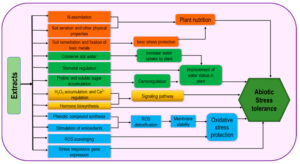
Extract-type biostimulant-induced mechanism for increasing abiotic stress tolerance

A consultant could recommend a biostimulant to aid in gene upregulation. Biostimulants can upregulate specific genes in plants, influencing various biological processes. For instance, they can increase the expression of genes related to photosynthesis, nutrient uptake, stress response and growth-promoting factors. Some of the ways biostimulants work are:
Hormone-mimicking actions: Some biostimulants mimic plant hormones triggering the upregulation of specific genes involved in growth and development.
Enzyme/protein function regulation: Biostimulants can influence the expression of genes coding for enzymes and proteins involved in various metabolic pathways leading to increased activity of these molecules.
Transcriptional regulatory pathways: Biostimulants can interact with transcriptional regulatory networks influencing the binding of transcription factors to DNA and activating the expression of specific genes. Biostimulants can upregulate genes involved in photosynthetic processes leading to increased chlorophyll content and photosynthetic efficiency. Alfalfa-based protein hydrolysates have been shown to upregulate genes involved in nutrient uptake, such as phosphate and nitrogen transporters. Biostimulants can upregulate genes involved in stress tolerance like those involved in antioxidant defense and osmoprotection, helping plants cope with adverse environmental conditions like drought or salinity. Biostimulants can increase the expression of growth-promoting genes, leading to enhanced plant growth and development.

Overall, biostimulants act as signaling molecules that modulate gene expression in plants leading to improved growth, stress tolerance and quality traits. They come in many different forms: acids, microbials, extracts and others. The message I am sending with this letter to crops is that there is help. Through communication within the plant aided by the outside influence of biostimulants, we can protect ourselves against abiotic stressors as well as biotic stressors.

-Advertisement-