



Listen to the audio version of this article (generated by A.I.)
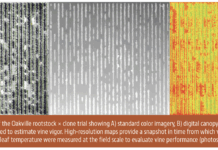
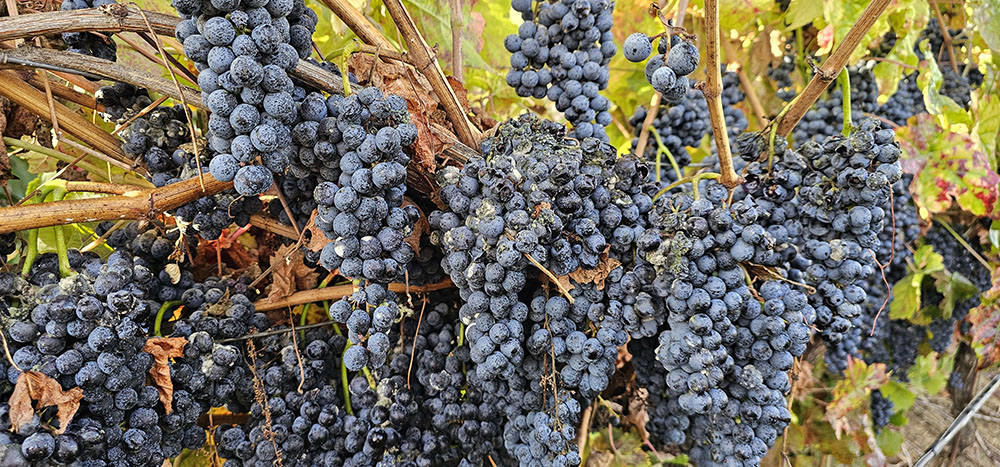
The 2025 growing season in California brought a cooler-than-average summer that delayed harvest across portions of the San Joaquin Valley and Napa Valley. What initially seemed like just a longer wait for sugar accumulation instead revealed an unexpected challenge: a noticeable increase in late-season fruit rots (Figure 1).
Weather data show that heat accumulated more slowly than in typical warm seasons, extending fruit development into late September and October. Several rain events occurred during this period, when berries were soft and sugar levels were still rising. In contrast, in warmer years like 2024, fruit matured earlier under dry conditions, avoiding this overlap between ripening and rainfall. The slower heat accumulation and moisture during the final weeks of 2025 created ideal conditions for fungal infection and explain the widespread appearance of unusual rots observed this year.
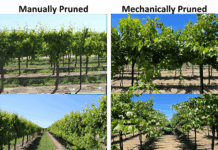
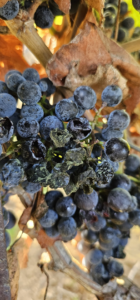
Growers, pest control advisers, and farm advisers reported clusters showing symptoms typical of Botrytis and Cladosporium rots (Figure 2), including in cultivars such as Cabernet Sauvignon, Zinfandel and Petit Verdot that are not usually heavily affected. These are late-ripening cultivars that require a high accumulation of growing degree days (GDD) to reach full maturity, often ripening late in the season when the likelihood of fall moisture increases. Under a cool year like 2025, the additional time needed for ripening extended fruit exposure to humid conditions, increasing the period of susceptibility.
Why we are seeing more Cladosporium rot
Cladosporium species are common vineyard inhabitants that typically live on grape surfaces as saprophytes—fungi that grow on dead and aging plant tissue. However, under mild temperatures and high humidity, especially when harvest is delayed, they can become opportunistic pathogens. Studies from California and Chile have shown that Cladosporium species infect berries with elevated sugar levels or minor skin injuries. As berries reach full maturity, the cuticle naturally thins and loses integrity, reducing its barrier function against fungal invasion. Disease development is favored when humidity remains high and temperatures range between 68 and 77°F (20 and 25 °C).
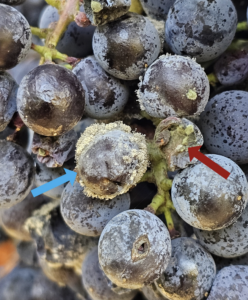
This year’s combination of cool temperatures, extended hang time and early fall rains favored Cladosporium infection and sporulation. The fungus thrives on senescing berry tissue, producing olive-green or dark brown growth that may easily be mistaken for Botrytis. In several vineyards, both fungi were observed colonizing the same clusters (Figure 2).
‘Cool temperatures, extended hang time and early fall rains in 2025 created ideal conditions for Cladosporium rot to emerge—even in cultivars not typically affected.’
A changing climate means changing risk
Seasons like 2025 are becoming more common as California’s climate grows increasingly variable. Cooler or wetter late seasons now occur in regions that traditionally experienced hot and dry ripening conditions. These shifts challenge existing fungicide programs, which are typically designed for shorter harvest periods. When harvest is delayed, the protective window of preharvest sprays may expire before fruit is picked, leaving clusters exposed during periods of high humidity or rain.
Preparing for future seasons
Growers and advisers should plan for longer harvest windows as part of their disease management strategy. Some practical steps include:
• Add a late-season protective spray if harvest is delayed and rainfall or heavy dew is expected. Check preharvest intervals and rotate fungicide modes of action.
• Scout carefully before harvest to detect early signs of Cladosporium or Botrytis sporulation in shaded clusters or damaged berries.
• Maintain canopy ventilation through leaf removal and crop thinning to reduce humidity around the fruit zone.
• Use weather-based forecasting tools that track temperature, humidity and rainfall to anticipate infection risk.
Looking ahead
The 2025 season highlights how quickly disease pressure can change with the weather. A proactive approach that includes careful monitoring, flexible spray programs and strong communication between growers, advisers and researchers will be essential for managing fruit rots under increasingly variable conditions.
Quick facts: Recognizing Cladosporium rot
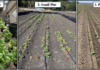
• Appearance: Olive-green to dark brown velvety growth on berry surfaces (Figure 3).
• Typical conditions: Moderate temperatures 68 to 77°F (20 to 25 °C) and high humidity, especially after rain or heavy dew.
• High-risk situations: Delayed harvest, extended hang time, tight clusters and shaded fruit zones.
• Management tip: Maintain fungicide protection when harvest is delayed and rainfall is expected.
References
Briceño, E. X., and Latorre, B. A. 2008. Characterization of Cladosporium rot in grapevines, a problem of growing importance in Chile. Plant Dis. 92:1635–1642.
Crandall, S. G., Spychalla, J., Crouch, U. T., Acevedo, F. E., Naegele, R. P., and Miles, T. D. 2022. Cluster rot disease complexes, management, and future prospects. Plant Dis. 106:2013–2025.
Latorre, B. A., and Briceño, E. X. 2007. Outbreaks of Cladosporium rot associated with delayed harvest of wine grapes in Chile. Plant Dis. 91:1137.
Solairaj, D., Ngolong Ngea, G. L., Yang, Q., Liu, J., and Zhang, H. 2022. Microclimatic parameters affect Cladosporium rot development and berry quality in table grapes. Hortic. Plant J. 8:171–183.
Swett, C. L., Bourret, T., and Gubler, W. D. 2016. Characterizing the brown spot pathosystem in late-harvest table grapes in the California Central Valley. Plant Dis. 100:2204–2210.

Karina Elfar
Akif Eskalen
Charlie Starr | PCA/CCA, Starr and Storm Crop Solutions