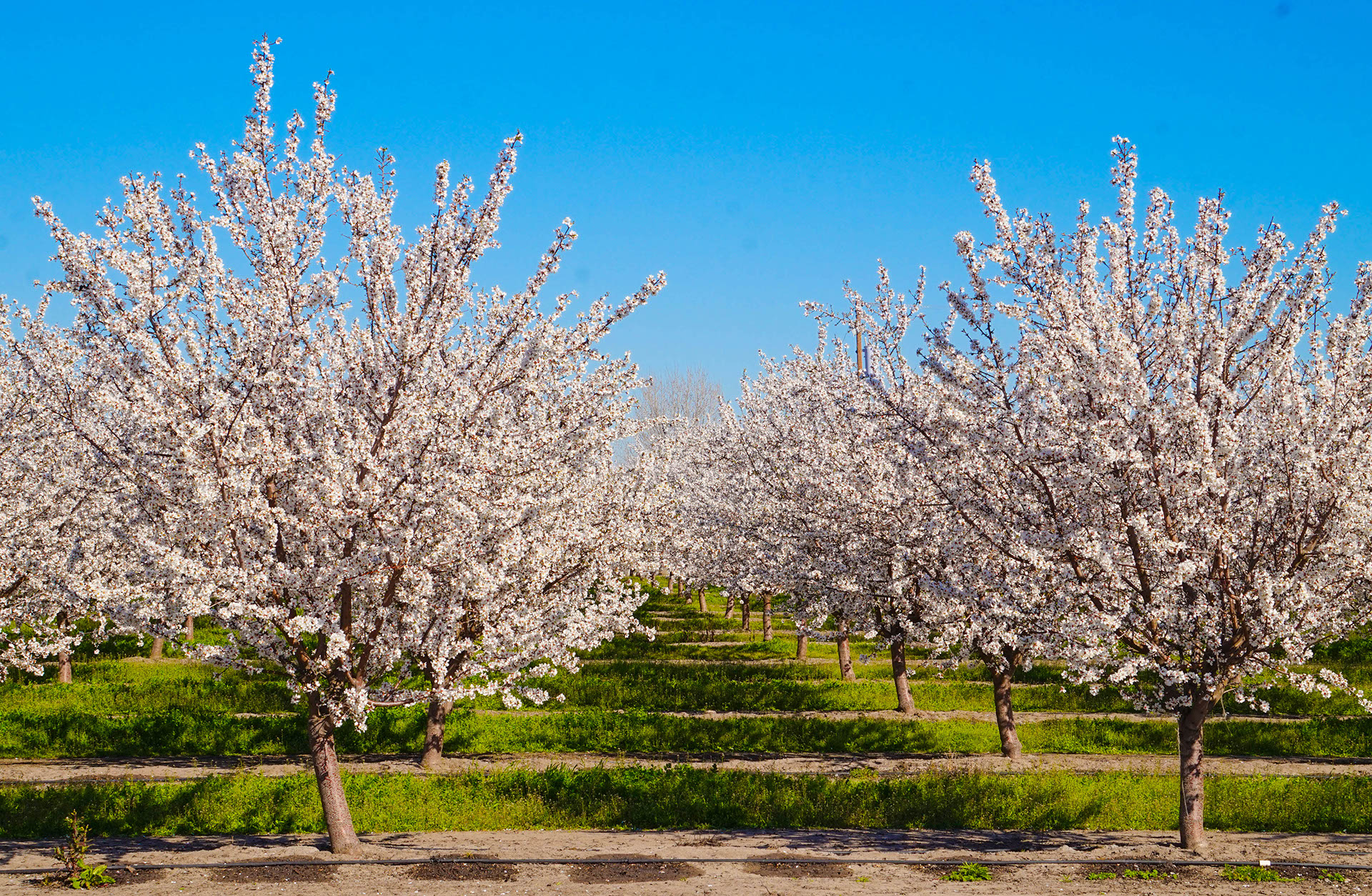



Almond growers have a narrow window from pink bud to petal fall to prevent outbreaks of bacterial and fungal diseases. UC IPM guidelines note that monitoring environmental factors during the critical period and knowing the disease history of specific orchards are important components to understanding the orchard needs and to prevent yield losses due to disease.
Depending on the level of disease inoculum present in the orchard, rainfall and warm temperatures can significantly increase the likelihood of a severe and widespread infection that will affect production. Dry weather during and right after bloom reduces the risk of serious infection. Spores are airborne or rain-splashed, and infection is favored when temperatures are in the mid-70s during bloom. Humid conditions can contribute to the chance of a disease outbreak. Preventive steps in the face of environmental conditions conducive to bloom disease outbreaks can be the difference between good almond production and severe yield loss.
The main fungal diseases in almonds at bloom are brown rot blossom blight, green fruit rot or jacket rot, and shothole. Less prevalent are scab, rust, leaf blight and anthracnose. According to UCCE San Joaquin County farm advisor Brent Holtz, the pathogens that cause these diseases are usually present in the orchard. The levels of inoculum possible this year depend on the past year’s disease levels. Environmental conditions, temperatures and moisture trigger disease development in the presence of the pathogen.
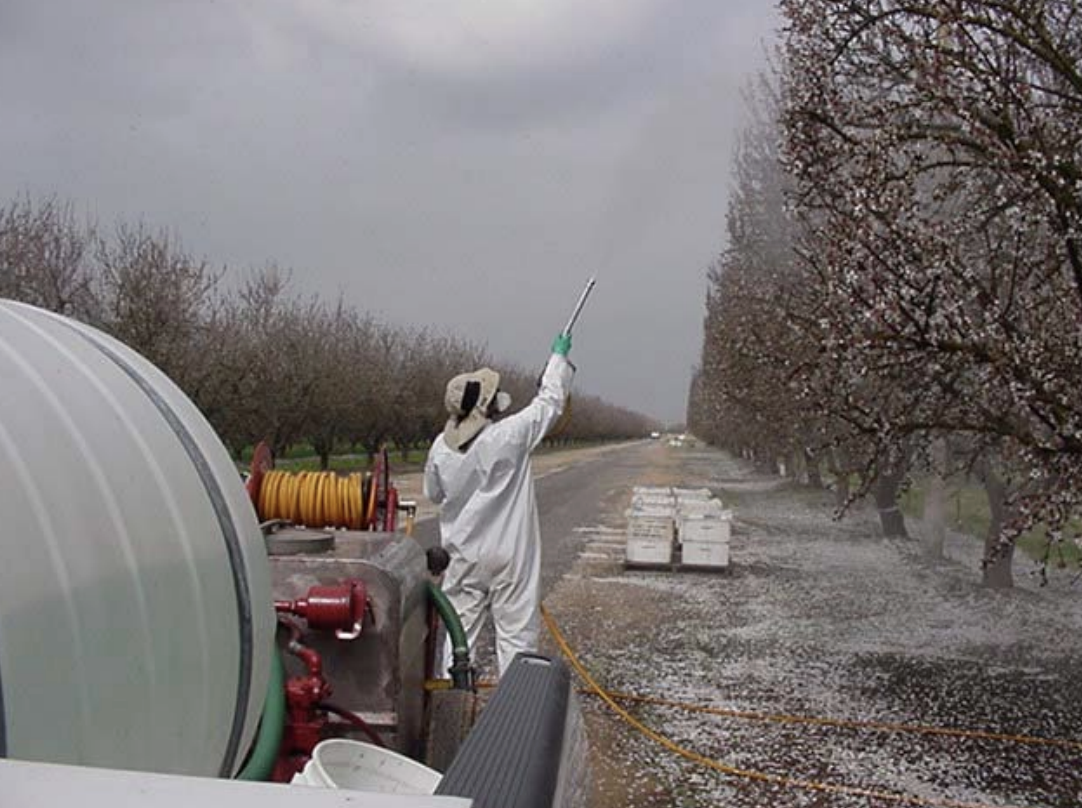
A successful prevention program is based on informed choice of fungicide, good timing of application and optimum coverage. Combinations of fungicides are commonly used to cover the spectrum of pathogens.
Brown Rot
Warm temperatures and enough dew formation can initiate a brown rot outbreak. A dry winter is no guarantee that brown rot won’t occur in the orchard. Decisions to make preventive spray applications should be based on history of disease in the orchard and weather predictions. In young orchards without any significant disease history, decisions for spray applications should be considered to prevent buildup of inoculum, particularly if older orchards are nearby.
There are specific conditions that favor bloom disease development. For blossom infection to occur at 50 degrees Fahrenheit, 18 hours of leaf wetness is needed. At a higher temperature of 68 degrees, only eight hours of leaf wetness is needed. High humidity affects disease symptom development. Spore masses can form on flower parts. The stamens and pistils are the most susceptible parts of the flower.
Timing fungicide applications is critical to prevention. According to UC, brown rot infection timing is from pink bud through petal fall. Full blooms are most susceptible. Two fungicide applications are normal for brown rot prevention. The first is done at 5 to 20 bloom with a systemic. The second, a rotation, is at 80% bloom or two weeks after the first. If wet weather persists, a third could be warranted. In dry conditions, a single application at 20 to 40% bloom is recommended.
Green Fruit Rot or Jacket Rot
Favorable conditions for infection are cool, wet weather and nut clusters that trap senescing flower parts. The pathogen moves into the jackets, damaging the nut embryo. Fungicide application timing is full bloom and when bloom is extended.
Shothole
This is a later bloom disease that infects leaves, fruits and green wood. Leaf infections result in a lesion with a yellow halo. The lesion later leaves a hole in the leaf. Severe infection can kill the developing nut or cause kernel deformities. The condition occurs with moisture and temperatures above 36 degrees Fahrenheit. It is common when significant rain occurs after leaf-out. The UC guidelines note the life cycle and fungicides for control.
Anthracnose
This disease is less common. It is triggered by warm, wet spring weather. Prevention should begin from pink tip forward to protect blossoms.
Bacterial Disease
Bacterial blast is low risk in dry years, but can cause significant damage in wet and freezing temperatures. Symptoms are shriveled blossoms. Buds can die, and dieback can occur on larger branches with severe infections.
A Section 18 request was granted for use of kasugamycin to prevent spread of the disease.
Honeybee protection is a concern with use of fungicides during bloom when bees are present. Applications should be made when bees are not actively foraging.