

Pest Tactic Journal Provides Open-Access Platform for Pest Control Research
Pest Tactic Journal was established a few years ago to provide the pest control industry and researchers a new way to publish and share scientific information. Pest Tactic Journal is now peer-reviewed and is indexed by the giant Crossref engine, which contains more than 150 million research and nonresearch article records.
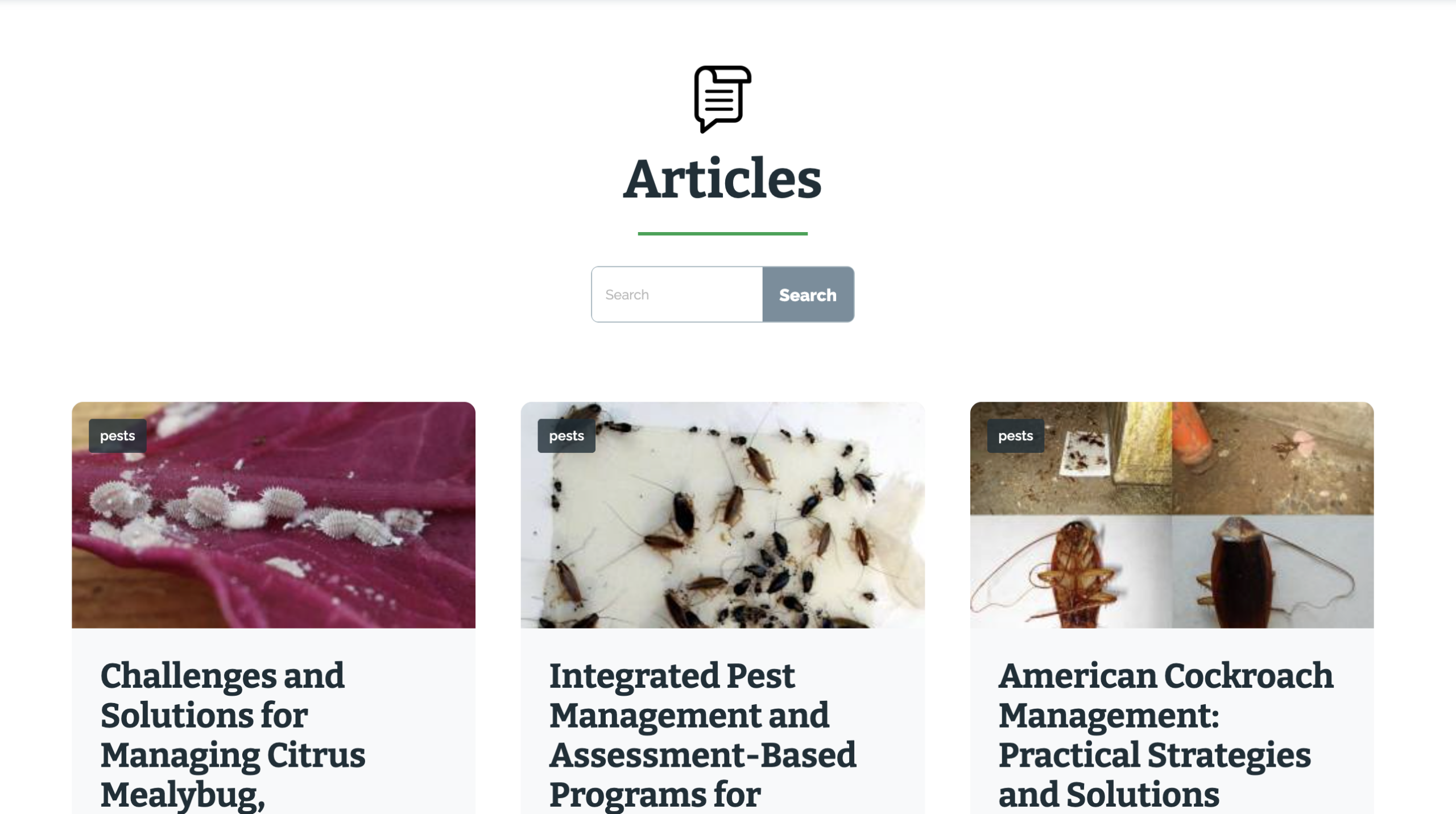
Pest Tactic Journal publishes peer-reviewed technical articles, original research, scientific reviews and pest profiles. The journal accepts articles on agricultural, ornamental plant, structural/urban, medical and veterinary pest control, with a focus on North America.
Entomologist Dr. Siavash Taravati created the journal to provide a new platform for high-quality open-access articles and to minimize the lengthy editorial processes encountered with some research and technical journals. Dr. Taravati encourages crop consultants and pest control advisers with scientific writing skills to submit their technical or research articles to the journal.
Taravati describes the online journal as a “hybrid” and open-access publication.
“We do peer review and value the pest control industry. We are filling the gap between academia and the pest control industry,” he explained.
Journal Topics
Topics may include insect pests and other arthropods, vertebrates, weeds, pathogens and others that are of economic or environmental importance. Taravati said that while PTJ values longer, more comprehensive articles, he also encourages shorter, high-quality submissions.
“This reflects an important and growing trend where readers, organizations and even search engines increasingly prefer more concise content,” Taravati said.
Pest Tactic Journal publishes articles in both HTML and PDF formats to improve online visibility, accessibility, readability across devices and compatibility with search engines.
Each article submitted to Pest Tactic Journal is reviewed by the editorial board and at least two external reviewers specializing in the topic.
In addition to Taravati, the journal’s editorial board includes Dr. Surendra Dara, an experienced entomologist who has authored or co-authored more than 400 scientific articles and has been recognized internationally for his research and extension on irrigation, nutrient and pest management issues, biostimulants and biological soil amendments to develop sustainable agricultural solutions.
The latest addition to the editorial board is Dr. Heather Martin, a plant pathologist and nematologist with nearly 30 years of experience in plant disease diagnostics and regulatory plant health programs in both the United States and Canada. Dr. Martin is a leader in the detection, diagnosis and management of plant pathogens and plant-parasitic nematodes affecting a wide range of crops and ornamental plants in urban landscapes, agricultural production systems and greenhouse environments.
Taravati is an entomologist who has a qualified applicator license from the California Department of Pesticide Regulation and has experience in agriculture, structural and public health pest management.
Katrina Hunter is the journal’s content editor and has expertise in science communication, pest management and pesticide regulations.
Guidelines for AI Use
The editorial board has also developed guidelines to help authors self-assess the appropriateness of AI use when preparing articles. Taravati said the use of grammar and spelling correction tools that improve the structure of the original sentence or content are acceptable, but the manuscript text should be author-generated.
AI-based tools for data collection, summarization and analysis, or for generating audiovisual content, are allowed with appropriate attribution. Other types of AI use that fall within the general publication guidelines should be clarified in a statement.
There is currently no fee to submit or publish in Pest Tactic Journal, but Taravati said donations are accepted to help cover production costs.
Taravati said unlike many large commercial publishers, Pest Tactic Journal operates as an independent, small-scale journal, allowing it to be flexible, community-oriented and focused on scientific communication. This business model also enables faster adaptation to emerging technologies, open-access practices and the evolving needs of researchers, pesticide applicators, pest management professionals and related professions.
Questions can be sent to editor@pomerix.com.